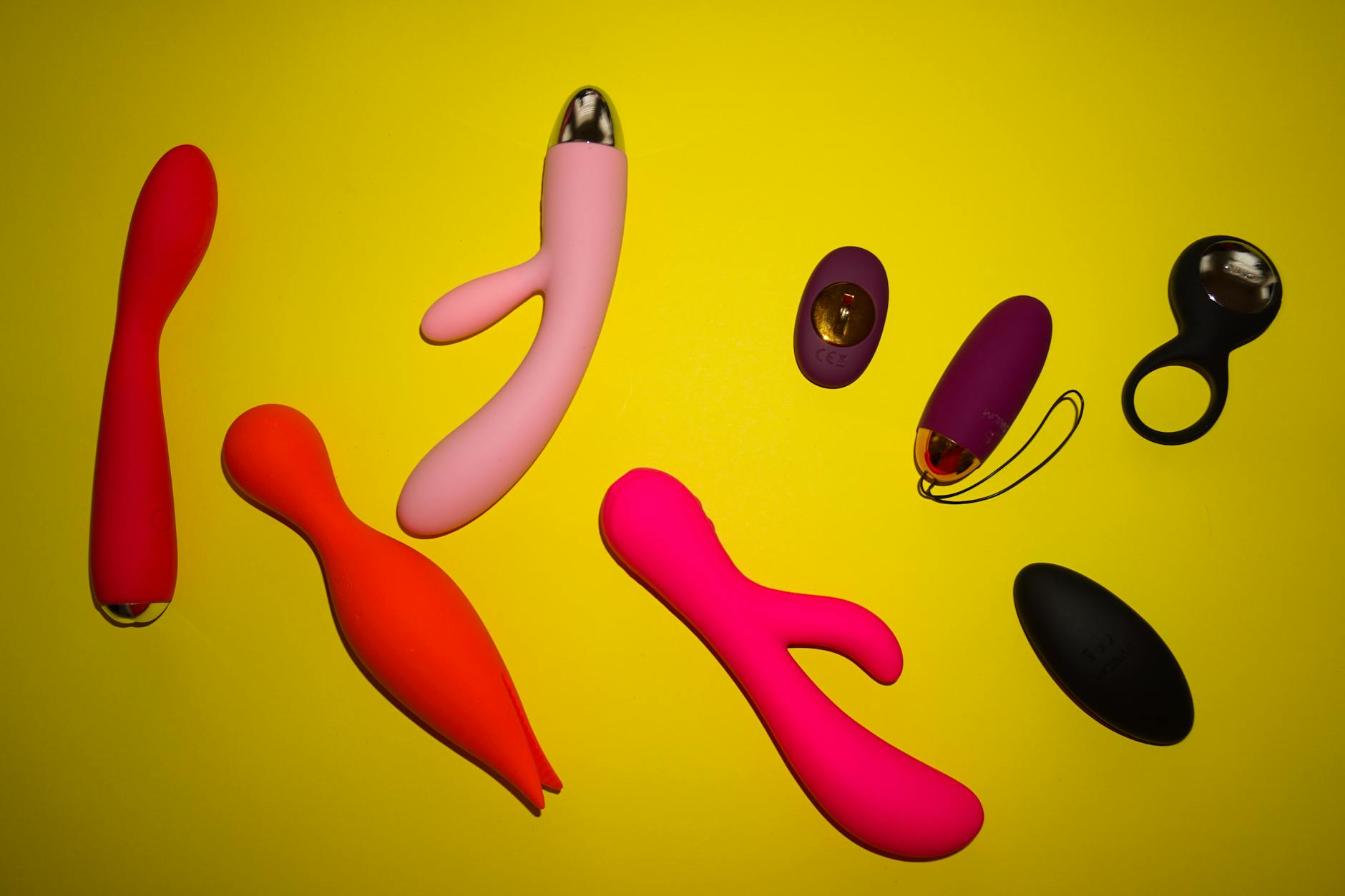
Why that first time felt like lightning and month three feels like a whisper
Here's what happens: you unbox your lemon clitoral vibrator. The suction is absolutely mind-bending. Fast-forward six weeks, and you're thinking about turning up the intensity, or wondering if the toy is losing charge faster, or maybe your body just isn't responding the same way. None of those things are true. What's actually happening is called sensory adaptation, and it's one of the most misunderstood parts of long-term vibrator use.
Your nervous system is designed to notice change, not constancy. That's survival wiring. When something stays the same for long enough, your brain essentially stops flagging it as novel information, which means the sensation fades into the background. This applies to everything, not just your lemon vibrator. It's why you stop noticing the hum of a refrigerator after a few days or the weight of your clothes on your skin the moment you get dressed.
But when it comes to pleasure, this adaptation feels personal. It feels like something's wrong. It's not.
The neuroscience of sensation fading
Your skin contains mechanoreceptors. These are specialized nerve endings that respond to pressure, texture, and vibration. There are different types, and they have wildly different adaptation timelines. Meissner's corpuscles, which respond to light touch and changes in vibration, adapt within seconds. Pacinian corpuscles, which detect deep pressure and high-frequency vibration, adapt within milliseconds.
Suction devices like the Hello Nancy lemon vibrator create a unique stimulus pattern. The rhythm is constant but the sensation builds with arousal. Over time, as you become familiar with the exact pressure and frequency, your mechanoreceptors send less urgent signals to the brain about what's happening down there. The stimulation hasn't changed. Your perception of it has.
This is not weakness. It's not numbness. It's your nervous system doing its job efficiently. The bad news: this adaptation is nearly universal. The good news: it's completely reversible.
Why your brain is getting bored (even if you're not)
There's also a psychological layer. Novelty triggers dopamine. The first time you use your lemon clitoral vibrator, your brain is flooded with new sensory input and anticipation. Over time, once the novelty wears off and your body knows exactly what to expect, the dopamine response decreases even if the physical sensation remains identical.
This is why switching toys temporarily, changing positions, or exploring different settings on your lemon vibrator can feel like a reset. You're not imagining that. You're reintroducing novelty, which wakes your nervous system back up.
People often interpret this as their toy being broken or their body being broken. The toy is fine. Your body is fine. Your brain just needs a reminder that sensation is worth paying attention to.
What actually changes (and what doesn't)
One thing worth confirming: your lemon vibrator isn't actually losing power. Check the battery by switching settings or comparing it to when you first bought it. Most lem vibrators hold their charge and intensity for years. What's changed is your detection of that intensity, not the intensity itself.
Your sensitivity also isn't permanently altered. This is adaptation, not damage. The receptors reset when you take a break from the stimulus. Even a week off can refresh your nerve endings' responsiveness.
What does change is your tolerance for predictability. Your brain has learned the exact pattern of your toy. That's actually a sign you've been using it consistently, which means you know what works. The goal now isn't to feel like the first time. It's to feel satisfied, which sometimes requires a strategy shift.
How to reset sensation and reboot intensity
Four approaches work with your neurology instead of against it.
Take a break. Two to four weeks is usually enough for mechanoreceptors to reset. This isn't forever. It's a circuit breaker. When you return to your lemon vibrator, the sensation will likely feel noticeably sharper and more intense. Your nervous system will be primed to notice it again.
Change the pattern. Instead of using the same setting every time, rotate through the different suction modes on your lem vibrator. Your brain notices variation. Alternating between pattern 2 and pattern 5, or switching between steady suction and pulse modes, keeps your mechanoreceptors firing differently.
Extend your warm-up time. Longer arousal periods before introducing the toy give your nervous system more time to anticipate the stimulus. When the sensation finally arrives, it lands with more perceptual intensity because you've built pressure and anticipation.
Combine with other sensations. Layer your lemon vibrator use with something completely different. Touch your nipples while using suction. Vary the angle of approach. Add temperature (a cool hand, warm breath). Cross-sensory input keeps your brain engaged and prevents simple adaptation to a single stimulus type.
Photo by Diana ✨ on Pexels
The difference between adaptation and desensitization
There's an important distinction here. Adaptation is temporary and reversible. Your nerve endings haven't been damaged. Desensitization happens when repeated friction or pressure actually damages tissue, numbing it. That's rare with suction toys because they don't create mechanical friction the way vibrators do.
If you're experiencing true numbness or pain instead of just reduced intensity, that's different. That might signal how to use a lemon vibrator without numbing sensation, and it's worth reading if intensity loss is paired with discomfort.
Adaptation with a suction toy like your lemon clitoral vibrator is normal and not a sign anything is wrong with you or your toy.
Why novelty is your secret weapon
If you don't want to take a full break, novelty is the next best tool. Switching toys periodically is actually brilliant for maintaining sensation. Your nervous system resets when it encounters a different stimulus pattern. This is why people with extensive toy collections don't experience the same adaptation that single-toy users do.
You don't need multiple toys. Rotating use is enough. Week one with your lemon vibrator at pattern 3. Week two with a different toy altogether. Week three back to your lem vibrator at pattern 5. Your mechanoreceptors stay engaged because they keep encountering variation.
When intensity loss signals something else
Rare exceptions exist. If your lemon suction toy genuinely stopped vibrating or lost suction power, that's a mechanical issue, not adaptation. Test it with your hand. Does the suction pull? Does it vibrate at all intensities? If yes, the toy is functioning normally and what you're experiencing is adaptation.
If your device has actually failed, that's different. Battery degradation does happen after a few years of regular charging, though quality lemon vibrators are built to last much longer. If you've had your toy for 18+ months and suspect battery issues, contact Hello Nancy support.
The freedom in understanding adaptation
Once you know this is adaptation, not damage, the pressure to force the same feeling every single time disappears. You can actually relax into using your lemon clitoral vibrator however serves you that day. Some days you want intense sensation. Some days you want comfort and ease. Some days you want to explore different settings or techniques.
That flexibility is actually where the most consistent pleasure lives. You're not chasing the first feeling. You're expanding your capacity to feel multiple kinds of good.
Your toy isn't broken. Your sensitivity isn't gone. Your brain is just doing its job, and now you know how to work with it.
FAQs: Intensity loss with lemon vibrators
How long does it take to adapt to a lemon vibrator?
Most people notice some degree of adaptation within two to six weeks of consistent use. The timeline varies based on frequency. Using your toy daily will trigger adaptation faster than using it once or twice a week. Intensity might feel reduced, or the sensation might feel more predictable even if the physical intensity hasn't changed.
Can I permanently lose sensation from using my lemon clitoral vibrator?
No. Adaptation is temporary. Your mechanoreceptors aren't permanently altered. Taking a break for two to four weeks resets sensitivity. Temporary reduced perception isn't permanent damage. If you experience lasting numbness or pain after stopping toy use entirely, that would warrant checking in with a healthcare provider, but that's extremely rare with suction toys.
Does using a lower setting on my lem vibrator prevent adaptation?
Not really. Your nervous system adapts to the stimulus pattern, not just the intensity. Starting lower might delay adaptation slightly, but it doesn't prevent it. Changing the pattern, taking breaks, or rotating toys is more effective than just using a lower setting perpetually.
Why does my lemon vibrator feel different on different days?
Variables like arousal level, stress, hydration, medication, where you are in your cycle, and time of day all affect sensation perception. This is separate from mechanical adaptation. Some days your toy will feel more intense simply because your nervous system is more primed to notice it, not because anything has changed about the toy itself.
Is there a best lemon vibrator for avoiding adaptation?
No single toy prevents adaptation. What matters is rotation and novelty. Varying your stimulation pattern, whether through different modes on the same toy or switching between toys, is what keeps sensation fresh. Why lemon vibrator sensations change over time goes deeper into how sensation itself evolves with use.
Can I use my lemon clitoral vibrator every day without losing intensity?
You can use it daily, but you'll likely experience adaptation more quickly. If daily use matters to you, rotating between different settings or pairing it with other sensations keeps perception sharp. Taking a one-week break every few months also helps reset sensitivity while maintaining regular use otherwise.
The bottom line
Intensity fade with your lemon vibrator or lemon suction toy isn't a failure of the device or your body. It's sensory adaptation, one of your nervous system's most efficient features. Understanding that distinction transforms how you relate to pleasure. Instead of chasing a single unchanging feeling, you get to explore the full range of what sensation means to you. That's actually a gift.
If you want to explore more about how bodies and toys interact over time, check out best lemon vibrator for long-term comfort and sustained use, which covers durability and consistent pleasure across months and years.
Your sensation isn't gone. It's just been reorganized. And you now have the tools to bring it back into focus whenever you need.