
Let's talk about why reaching orgasm sometimes feels impossible
You're not broken. Between 10 and 15 percent of people with vulvas experience anorgasmia—the persistent difficulty or inability to orgasm—even with adequate stimulation and arousal. Another 20 to 30 percent struggle with it situationally. That means you're not alone, and it's not a personal failure.
Here's the thing nobody tells you: the pathway to orgasm isn't one-size-fits-all, and neither is the solution. What didn't work with a partner, or with your fingers, or with a standard vibrator might work perfectly with a lemon clitoral vibrator that uses suction instead of vibration.
Why suction changes everything for difficulty reaching climax
Most vibrators stimulate through rapid oscillation. That works beautifully for some people. For others—especially those with difficulty reaching orgasm—suction-based stimulation creates a fundamentally different chain reaction in the body.
A lemon vibrator uses gentle suction that mimics oral sex at a neurological level. Instead of focusing all sensation on a tiny point of contact, suction distributes stimulation across a broader tissue area while creating a pulse pattern that's often less overwhelming than traditional vibration. For people whose nervous systems are sensitive to direct friction or high-frequency buzz, this difference is everything.
The clitoral structure extends far deeper into your body than most people realize. The external part is just the tip. Suction reaches more of that internal network. That's why many people experience their first orgasm, or their most intense orgasms, using a lemon clitoral vibrator when other methods haven't landed.
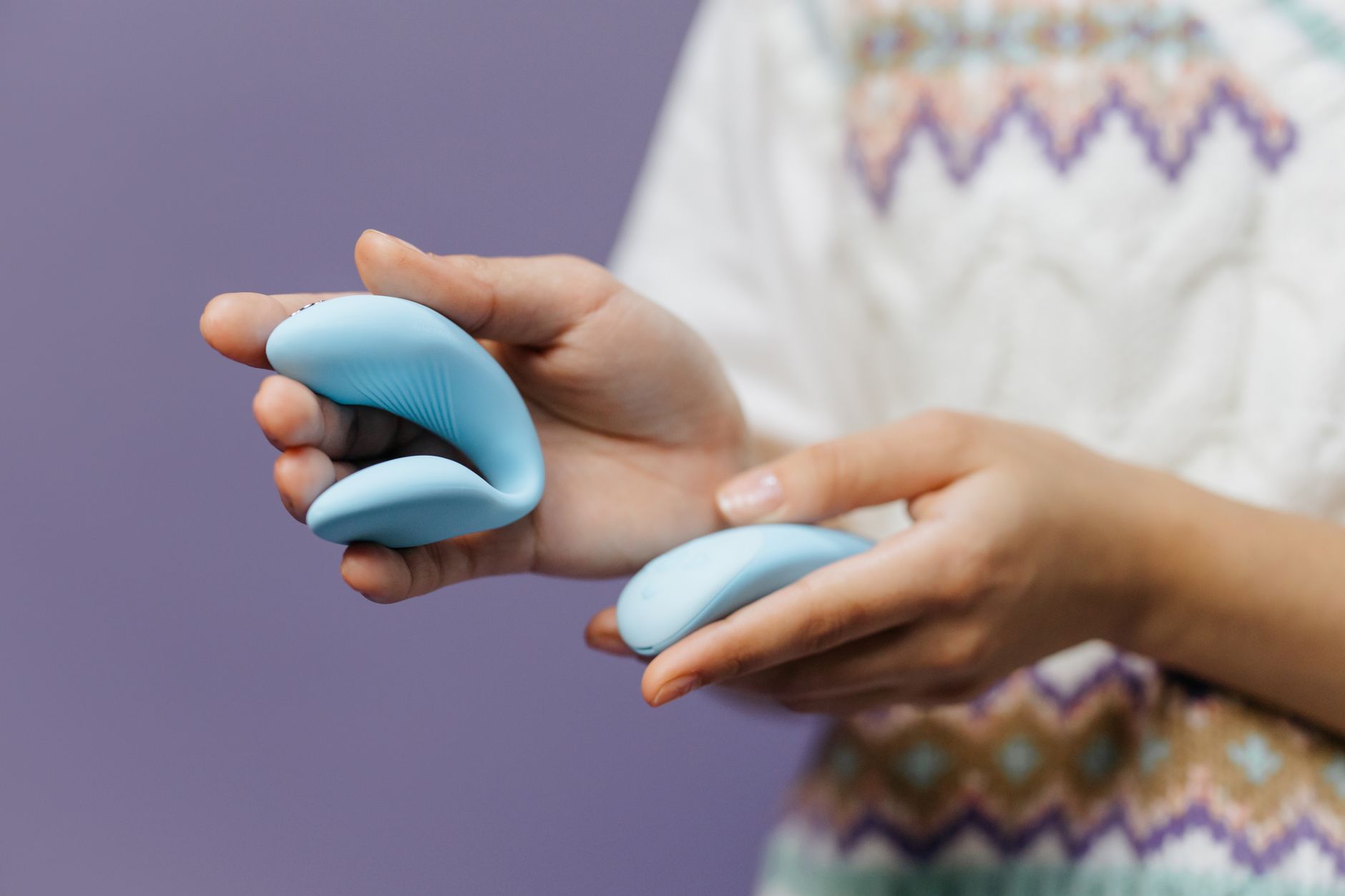
Photo by cottonbro studio on Pexels
The mental block piece (and why it matters more than you think)
Difficulty reaching orgasm is rarely 100 percent physical. Anxiety about not orgasming, pressure from a partner (or from yourself), distraction, or past experiences often sit underneath. A lemon vibrator doesn't bypass that. But here's what it does do: it removes one variable.
When you're not battling a buzzing sensation that feels too intense or too localized, your brain can relax into the experience. You stop monitoring your own performance and can actually feel sensation. That mental shift alone sometimes unlocks what physical stimulation alone couldn't.
If you've been trying for years and nothing has worked, that accumulated frustration is now part of the equation. Starting with a new tool—something completely different from what you've tried—gives your nervous system permission to approach pleasure differently.
How to use a lemon vibrator when you have anorgasmia: the actual protocol
Start with zero pressure. Not metaphorically. Set a timer for 15 minutes and commit to nothing. Your job is to notice sensation, not to produce an outcome. This is the hardest part and the most important part.
Warm up first. Spend 5-10 minutes with your hands, or with a partner, getting blood flow to the area and building arousal naturally. A lemon vibrator works best when you're already somewhat turned on. It amplifies arousal; it doesn't create it from scratch.
Start on the lowest setting. If your lemon clitoral vibrator has multiple intensity levels, begin at level 1 or 2. You can always increase; you can't unsensitize yourself mid-session. This matters especially if you have difficulty reaching orgasm—your nervous system may be primed to reject overstimulation.
Position it gently. Place the suction cup directly over your clitoris (not off to the side). The seal is what creates the effect. Don't press hard. Let the gentle suction do the work. Pressure often blocks sensation rather than enhancing it.
Breathe. This sounds absurd but it's not. When we anticipate pleasure, we often hold our breath. Consistent, deep breathing keeps your nervous system in parasympathetic mode—the state where orgasm actually happens.
The patience piece (why 20 minutes beats 5)
If you've been using vibrators that didn't work, your body learned not to expect pleasure from that tool. Rewiring that takes repetition. Plan for 15-25 minute sessions, not quick sessions. Your nervous system needs time to recognize and trust the new pattern of stimulation.
Many people report that their first few sessions with a lemon vibrator feel pleasant but don't lead to orgasm. By session 3 or 4, something shifts. The pathway opens. This is totally normal and not a sign something's wrong.
What to adjust if it's still not working
Try different patterns. Many lemon vibrators cycle through suction intensities rather than just offering one constant sensation. Explore them. Your nervous system might respond to a pulsing pattern more readily than a steady one.
Combine it with other input. Penetration, a partner touching other parts of your body, or even just having someone present sometimes helps. Anorgasmia often improves with reduced isolation, not more. A lemon vibrator isn't meant to replace connection; it's a tool that works better alongside it.
Experiment with angle. The clitoris isn't always in exactly the same place. Slight shifts in how you position your lemon clitoral vibrator can unlock different nerve pathways. Spend a session just exploring angle without expecting an outcome.
Consider timing. Your menstrual cycle, stress levels, and sleep all affect clitoral sensitivity. If you've been trying during high-stress periods, wait for a calmer week. This isn't about perfect conditions; it's about not stacking difficulty on top of difficulty.
When to bring a partner into this
If you're using a lemon vibrator in a partnership, communication matters. Tell your partner what you're working on. Let them know the goal is exploration, not performance. Ideally, they can be present without monitoring or coaching. Many people find that someone else in the room—present but not managing—creates enough security for the nervous system to open up.
If your partner has performance anxiety about your difficulty reaching orgasm, that's a separate conversation that might benefit from the relationship work outlined in how to use a Lemon Vibrator when your partner orgasms quickly. The same de-pressurizing principles apply.
The neurological reset
Anorgasmia sometimes happens because your nervous system has learned to tense up in anticipation of pleasure, which blocks pleasure. That's a learned pattern, which means it can be unlearned. A lemon vibrator, used consistently without pressure, often helps reset that pattern because the suction-based stimulation is different enough from whatever pattern created the block in the first place.
If you've been using traditional vibrators for years without success, switching to suction isn't failure. It's strategy. Your body isn't broken; it's just saying this particular input isn't the right frequency for your wiring.
When to involve a professional
If you've tried a lemon clitoral vibrator consistently for 4-6 weeks with no shift, it's worth checking in with a sex-positive therapist or a gynecologist trained in sexual health. Anorgasmia can sometimes point to hormonal issues, medication side effects, or relationship dynamics that benefit from professional support. That's not weakness. That's being smart about your own body.
Medications like SSRIs, birth control, and blood pressure drugs all can affect orgasm capacity. If you've recently started something new, that timing might not be coincidental. A conversation with your prescriber could matter.
What won't change with a lemon vibrator alone is relationship dissatisfaction, untreated depression, or unprocessed trauma. Those need different support. But once those pieces are in place, a lemon vibrator often becomes the tool that finally makes the pathway accessible.
FAQ: Difficulty reaching orgasm with lemon vibrators
Can a lemon vibrator actually help if I've never had an orgasm?
Yes, frequently. Lemon clitoral vibrators work differently from traditional vibrators because of the suction mechanism. For people who've tried everything else without success, that neurological difference sometimes creates the breakthrough. It's worth trying before accepting that orgasm isn't possible for you.
How long should I use a lemon vibrator before expecting results?
Give yourself 4-6 consistent sessions over 2-3 weeks before evaluating. Your nervous system needs time to recognize and trust a new pattern of stimulation. One session rarely produces an orgasm if you've been struggling; consistency rewires the pathway.
Is there a wrong way to use a lemon vibrator if I have anorgasmia?
The main mistake is using it with the expectation of orgasm rather than as exploration. Pressure kills pleasure. The second mistake is starting too high on intensity settings. Low and slow is the protocol when your nervous system has learned not to expect pleasure.
Does anorgasmia mean I'm not attracted to my partner?
Not necessarily. Anorgasmia can be completely separate from attraction or relationship satisfaction. It's often about nervous system activation patterns, past trauma responses, medication effects, or just having a body that responds to different types of stimulation than you've been using. A lemon vibrator can help sort that out by removing variables.
What if a lemon vibrator feels too intense even on the lowest setting?
Try moving it slightly off the clitoris at first, letting yourself acclimate to the sensation, then gradually repositioning it directly over the clitoris after 5-10 minutes. Some people also find that using a thin barrier like a washcloth between skin and the suction cup reduces intensity while keeping the benefit. You're teaching your nervous system to accept pleasure safely.
Can I use a lemon vibrator if I'm on antidepressants?
Yes. SSRIs often affect orgasm capacity, but a lemon clitoral vibrator sometimes helps bypass that by creating a different neurological pathway. If medication is blocking orgasm, talking to your prescriber about adjustment timing or alternative medications is also worth exploring. But a lemon vibrator is worth trying first because it requires nothing but time.
The real thing about anorgasmia
Orgasm isn't a measure of how sexy you are or whether your relationship is working. It's a nervous system response to stimulation. When that response isn't happening, it means your particular wiring needs a different approach. A lemon vibrator offers that different approach. It's not a magic solution, but for many people, it's the tool that finally made the whole thing click.
If you're ready to explore, start low, stay patient, and give yourself permission to make this about pleasure instead of performance. That shift alone sometimes changes everything.