
Let's stop pretending they're the same thing
Honestly, if you've been lumping suction toys and vibrators into one bucket called "clitoral vibrators," you're missing half the pleasure conversation. They're nothing alike. One uses rapid oscillation to stimulate nerve endings through friction. The other mimics a specific sensation your body knows from experience. Both can be incredible. They just feel completely different.
The problem is that most people buy their first lemon clitoral vibrator without understanding what they're actually choosing. Then they either love it or they're baffled about why it doesn't work. The tool wasn't wrong. They just picked the wrong tool for their nervous system.
How vibration actually works
Vibrators send rapid movements through tissue, typically 40 to 300 oscillations per second depending on the motor. This creates a chain reaction in your nerves. The stimulus travels through the clitoris, up the pelvic nerves, and registers in the sensory cortex of your brain. Fast, consistent, repetitive.
That's what makes vibrators so good for people who need steady, predictable input. Your nervous system learns the pattern quickly. Build-up is fast. Orgasm often arrives in 5 to 15 minutes, sometimes faster.
The flip side: some people find vibration too intense, too buzzy, or too one-note. If your clitoris is sensitive, the direct friction can feel almost painful. If you're someone whose arousal needs storytelling, fantasy, or slower emotional build, vibration can feel like skipping straight to the ending.
How suction works (and why it's different)
Suction toys like the Lemon use gentle negative pressure. They don't vibrate. They draw the clitoral hood and tissue upward, then release, then repeat. It's not friction. It's a pulling sensation that mimics oral sex.
Your body already knows this feeling. Oral sex creates suction naturally. So when a suction toy engages the same neural pathways, it often feels intuitive and recognizable in a way vibration doesn't.
Suction also tends to feel less intense at lower settings. You can use a Lemon vibrator on pattern 1 and experience gentle, almost meditative sensation. Crank it to pattern 8, and it becomes more aggressive. The range is real.
The build-up is often slower than vibration, which some people experience as a feature, not a bug. Arousal gets time to deepen. Orgasms sometimes feel more full-body, less localized.
Intensity versus sensation type
Here's where most conversations about lemon sexual toys get confused. People talk about "intensity" when they really mean two different things: the force of the sensation, and the type of sensation.
A vibrator can be high-intensity (strong, buzzy, fast) or low-intensity (gentle, subtle, slow). Same with suction. But intensity isn't the variable that matters most. The variable that matters is sensation type.
If your clitoris responds well to direct, rhythmic stimulation, vibration will probably work for you even at low intensities. If your body is wired for suction, even the strongest vibrator might feel wrong.
Think of it like music. A song doesn't become better or worse because it's louder. It becomes better when it's the right frequency for your ear.
Why nerve density matters more than you think
Your clitoris has about 8,000 nerve endings, but not all of them are equal. Some are clustered at the surface, some run deeper. Some respond best to broad, diffuse pressure. Others light up with precise, focused stimulation.
If you have high surface nerve density, direct vibration against the clitoral glans might feel perfect, or it might feel overwhelming. If your nerve endings are deeper, you might find vibration barely registers, and suction feels like finally being touched the way you need.
You can't know your own nerve map without trying. But you can get clues. If you've always orgasmed fastest with direct hand stimulation and pressure, vibration is probably your friend. If you've had partners give you oral sex and that sensation drove you wild, suction deserves a try.
Sensitivity changes everything
Here's something that shifts the whole equation: your clitoris isn't the same every day.
During your cycle, hormonal fluctuations change blood flow, tissue thickness, and nerve sensitivity. Early follicular phase, many people feel more direct stimulation. Around ovulation, some find everything feels more intense. After ovulation, some need gentler input or more foreplay.
During perimenopause or after hormonal birth control changes, your baseline sensitivity might shift permanently. Years of one toy can also train your nerve endings to expect that specific sensation, which is why some people hit a plateau.
This is why having both tools matters. A Lemon clitoral vibrator and a good vibrator give you options. Some days suction feels transcendent. Other days you need vibration. Both are right.
The psychological component
Your brain is the largest sex organ, and it has opinions.
If you have a strong mental association with oral sex, suction toys often feel more psychologically satisfying. The sensation itself mimics the real thing in a way that matters to your arousal. If you're someone who finds your own hand gets tired and you love the idea of consistent, hands-free stimulation, vibration wins.
If you've had partners who didn't know how to handle your body, or if you've spent years in a relationship where your pleasure wasn't prioritized, your nervous system might be skeptical of any toy at first. That's not a tool problem. That's a trust problem. It usually solves itself with time, but it's worth knowing.
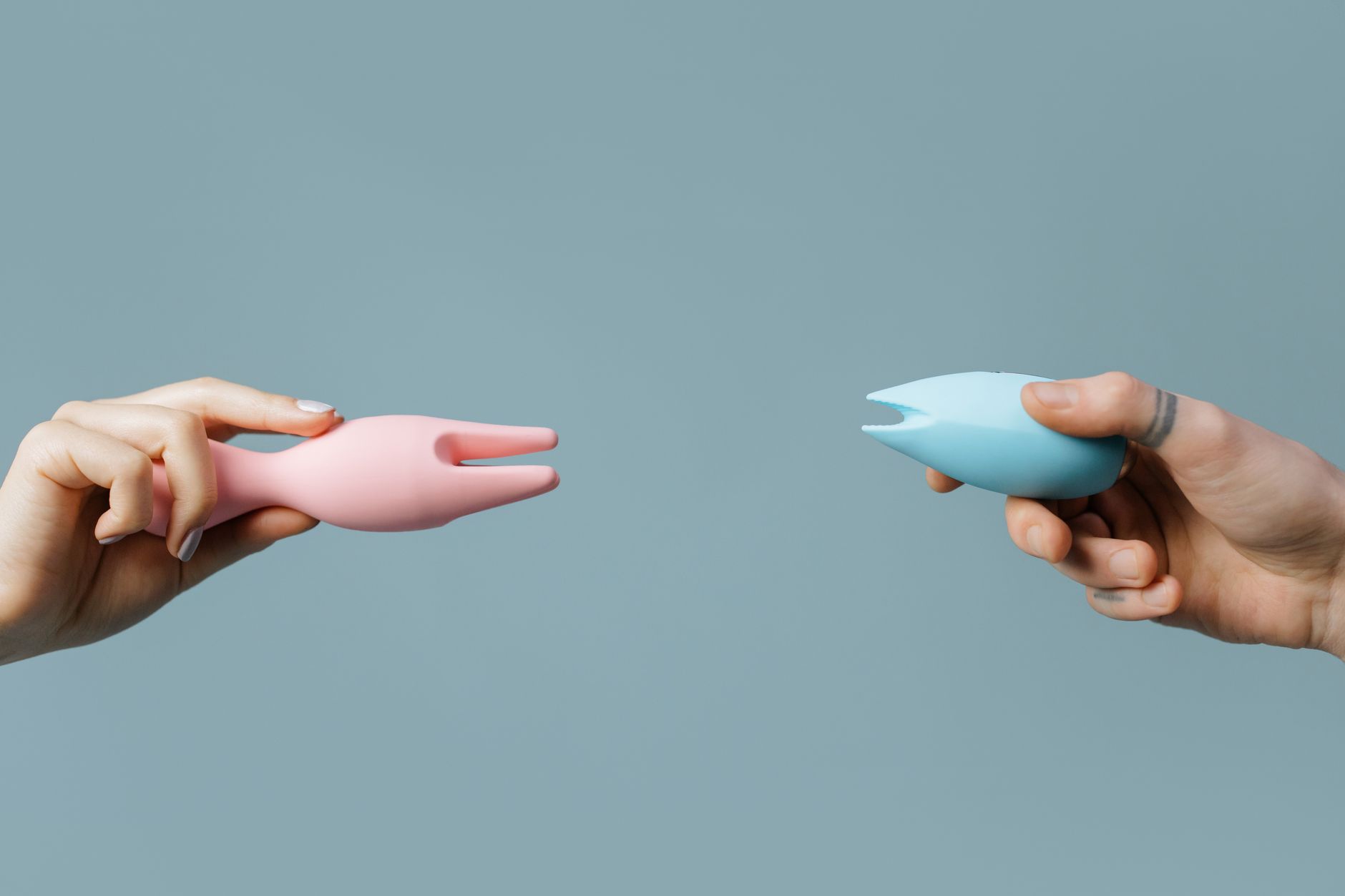
Photo by cottonbro studio on Pexels
Practical ways to figure out which works for you
Start with what you already know about your body. Spend five minutes with your hand and notice what actually feels good. Are you moving in fast circles? Slow, broad strokes? Holding pressure steady? Tapping? That motion is your clue.
If you tend toward fast, small movements, vibration is probably your play. If you like broad pressure or slower, deliberate contact, suction might click better.
When you try a toy for the first time, give it at least three sessions before deciding it's not for you. Your body needs time to learn a new sensation. Pattern 1 or 2 first, always. Save the aggressive stuff for after you know what you're working with.
If suction feels weird at first, don't bail. Many people find it takes 10 to 15 minutes to understand the sensation. Then it becomes their favorite. Same with vibration. The first "no" isn't always the final answer.
When you feel resistance ("this isn't working"), pause and ask: is my body saying no, or is my mind uncertain? Sometimes anxiety or distraction mimics incompatibility.
When to mix them
Here's the secret that changes everything: you don't have to choose. Many people use vibration for a specific, fast orgasm, then use suction for longer, more exploratory sessions. Some use vibration to start, then switch to suction when sensitivity rises. Some alternate nights.
If you're with a partner, suction on yourself while they touch you somewhere else creates a completely different sensation than either alone. The divided attention shifts what your nervous system does with the input.
Signs vibration is your person
You climax fast with hand stimulation. Direct clitoral contact feels amazing. You like intensity and predictability. You want an orgasm in under 20 minutes. Buzzing sensation doesn't feel uncomfortable. You've always preferred vibrators over other toys.
Signs suction might be your play
Oral sex has always been your favorite. You like slower build-up. Intense direct pressure sometimes feels too much. You want a toy that mimics real touch. You've hit a plateau with vibration. You like the idea of hands-free stimulation but want it to feel intimate. Direct clitoral contact sometimes feels irritating or numb.
The real talk
Your pleasure doesn't need to look like anyone else's. Some people will always be vibration people. Some will always reach for suction. Some will rotate between them based on their cycle, their mood, their partner, their stress level, or just what they feel like today.
The tool matters less than your willingness to pay attention to what your body actually wants. Read your signals. Try things. Notice what changes. That's the real skill. The toy is just the object.
FAQ: Suction, vibration, and your clitoris
Can you use suction and vibration together?
Absolutely. Some people layer sensations by using vibration on one area (inner labia, G-spot) while using suction on the clitoris. Others use vibration first to build arousal, then switch to suction for the approach to orgasm. It depends on your body and what feels integrated versus overwhelming.
Is suction less intense than vibration?
Not necessarily. A Lemon clitoral vibrator on high can feel extremely intense. The difference is type, not always intensity. Suction feels like pressure and pulling. Vibration feels like oscillation and buzzing. Intensity exists on both sides of that spectrum.
Why does vibration make me numb over time?
Your nerve endings adapt to consistent input. If you use the same vibrator at the same intensity every day, your body learns to expect that signal and stops responding as dramatically. This is why rotating toys, varying speeds, and taking breaks helps. Your nervous system needs novelty to stay engaged.
Can I use a suction toy if my clitoris is very sensitive?
Yes, and it might actually help. Start on the lowest setting and use it very briefly, like two to three minutes. Many people find that suction feels less irritating than vibration on sensitive tissue because it's not direct friction. But go slow and listen to your body.
Is one better than the other for partners to use during sex?
Neither is objectively better. Some partners find vibration easier to handle hands-free or during intercourse. Some find suction more intimate or less awkward to angle. The best choice is whatever works for your dynamic. How to use a lemon vibrator when your partner wants to watch can help you figure out the logistics.
What if I like both equally?
Then you're in the best position. You have options, and your nervous system gets to choose based on what it needs on any given day. That flexibility is a gift.
The bottom line
Choosing between suction and vibration isn't about finding the "right" answer. It's about tuning in to what your nervous system actually wants. Some bodies light up with vibration. Others need suction. Many need both. There's no hierarchy. There's just information.
Start with curiosity instead of expectation. Notice what feels good. Pay attention to the subtle differences between sensations. Give new tools time to make sense. Your clitoris is smart. Trust it.
If you're exploring for the first time or rebuilding after a shift in sensation, take your time. There's no pressure to have it figured out immediately. When sensation feels numb after frequent solo use, patience and variation are the real tools. The toy is just the vehicle.
Your pleasure matters. The way you experience it is unique. Honor that.