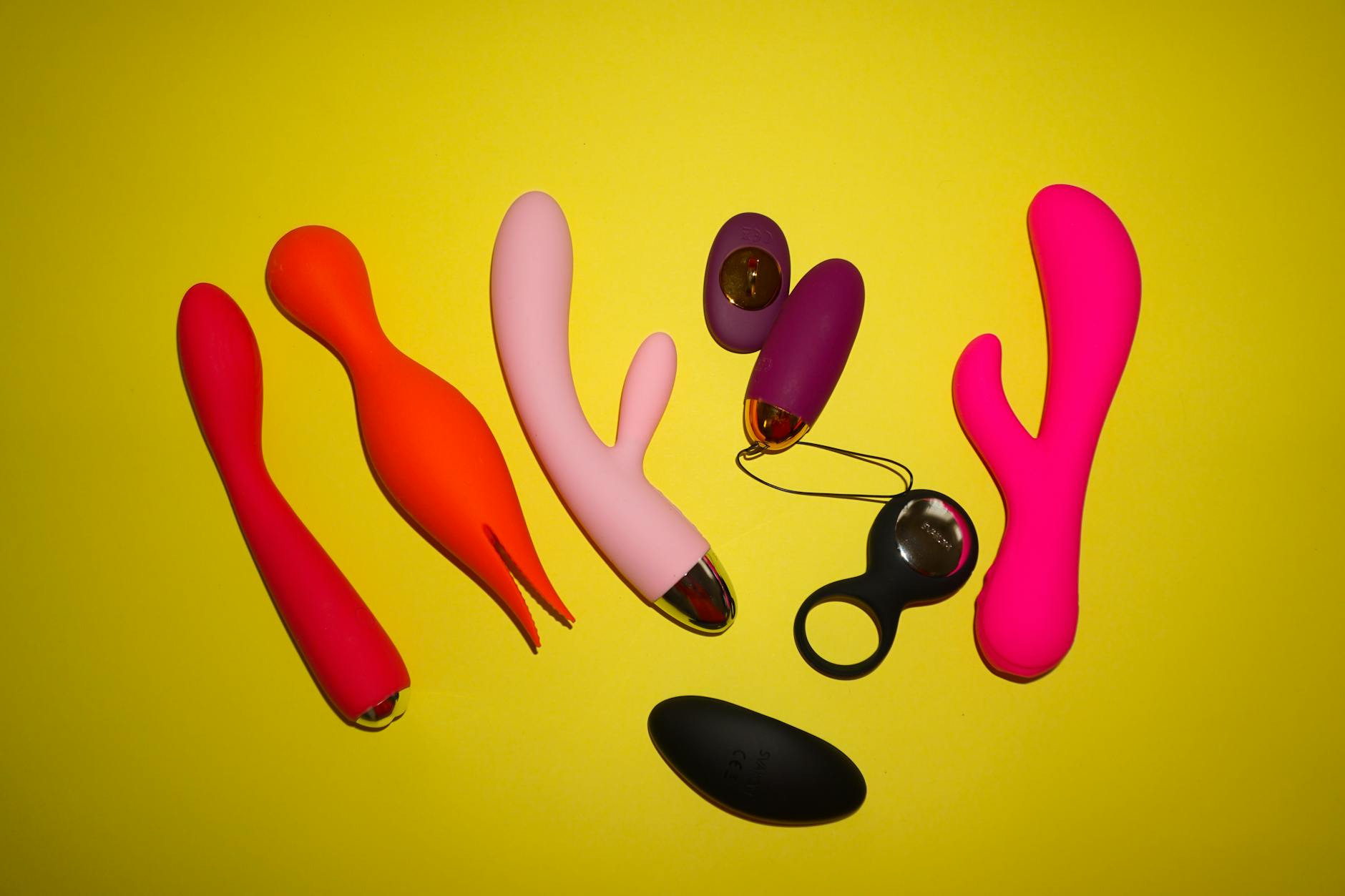
Let's talk about what "sensitive" actually means
If direct vibration on your clitoris feels sharp, overwhelming, or even painful, you're not broken. You're also not alone. Between 20 and 30 percent of people with vulvas report that traditional vibrators feel too intense or uncomfortable in ways they can't quite name.
The issue isn't weakness or dysfunction. It's anatomy meeting physics. And once you understand the difference, finding pleasure becomes way easier.
How traditional vibration actually works
A standard vibrator creates rapid mechanical oscillation. Think of it like a tuning fork pressed directly against sensitive tissue. The vibration transfers through the toy into your skin, which then transmits the sensation upward through nerve endings.
For people with less sensitive clitorises, this direct transfer feels wonderful. For people with more sensitive anatomy (which includes people with thinner tissue, heightened nerve density, or vulvodynia), the same mechanical force can feel harsh or even triggering. Your nervous system isn't faulty. The tool is just mismatched.
Lemon vibrators work differently. Instead of vibration, they use suction and pulse technology. Air-pulse clitoral vibrators like the Lem create a gentle seal and then release pressure rhythmically. Your clitoris is being stimulated from above, not directly contacted and hammered by a vibrating surface.
The nerve science behind suction-based stimulation
Your clitoris has about 8,000 nerve endings concentrated in the glans (the visible tip). Traditional vibrators activate those nerves through direct mechanical contact. Suction-based lemon clitoral vibrators activate them through pressure changes.
Here's why that matters. Direct vibration sends a constant, rapid signal. Your nervous system eventually habituates to it. You have to turn up the intensity. Suction creates a pulsing pattern that mimics the natural way blood pressure changes during arousal. It feels more like what your body expects, which means your nervous system stays responsive longer without needing more intensity.
For people with sensitivity issues, this is huge. You get stimulation that feels more pleasurable and less jarring. Many users report that they can reach orgasm faster with air-pulse technology because the sensation feels less like "friction" and more like "touch."
Why lemon design specifically reduces discomfort
The shape matters. Lemon vibrators (and similar suction toys) are designed with a small opening that creates the seal. This design has two advantages for sensitive people.
First, only part of the opening contacts your clitoris, not the whole toy. You have control over how much area receives stimulation. If you're at an angle where you feel more pressure, you can adjust without removing the toy entirely.
Second, the sealed chamber is small enough that you can control pressure with your own body position. You're not at the mercy of the toy's power setting. You're an active participant in how much suction happens. That sense of control alone makes a difference for people with trauma history or anxiety around sensation.
The intensity spectrum (and why you might need lower levels)
Most traditional vibrators have three to five intensity settings that range from "moderate" to "absolutely relentless." Many people with sensitive clitorises find that even the lowest setting is too much.
Lemon clitoral vibrators typically have 10 to 12 intensity levels, starting much lower. The Lem, for example, has gentle pulse patterns at the bottom that feel more like a rhythmic caress than active vibration. You can stay on setting 2 or 3 indefinitely without your nervous system getting overwhelmed.
This is partly psychology and partly physiology. Knowing you have finer control makes the experience feel less fraught. You're not bracing for overstimulation. You're able to relax into what's happening.
Material sensitivity and comfort
Not every sensitivity issue is about vibration intensity. Some clitorises are sensitive to material texture or temperature.
Quality lemon adult toys are made from medical-grade silicone, which is non-porous and doesn't harbor bacteria the way rubber or jelly materials do. Silicone also warms quickly to body temperature, which feels less jarring on sensitive tissue. If you've had trouble with other toys feeling cold or rough, that's worth trying.
Water-based lubricant matters too. People with sensitive vulvas often have less natural lubrication or experience irritation from friction. A good lube creates a protective barrier and reduces the micro-tearing that can happen with direct contact. Many find that combining a quality lemon vibrator with a generous amount of water-based lubricant makes the experience completely different from their previous attempts.
When to use lemon vibrators over other options
Lemon sexual toys are brilliant for a few specific situations. If you experience vulvodynia, provoked vestibulodynia, or other pain conditions, suction-based stimulation is often recommended by sex therapists because it avoids direct contact with the most sensitive areas.
If you've had negative experiences with vibrators feeling too intense, lemon clitoral vibrators are worth trying before you assume you're just "not a vibrator person."
If you have a lower pain threshold but high pleasure capacity (yes, those are independent), you might discover that you're not less capable of pleasure. You just needed the right tool.
For partners who want to explore together, a lemon vibrator can feel less clinical than traditional vibrators. The shape is less intimidating, and the sensation is often easier to relax into, which matters if anxiety has been part of the experience.
What to avoid if you have sensitivity
Several things make sensitivity worse. Avoid toys made from porous materials like jelly rubber or TPE, which trap bacteria. Avoid vibrators with rigid plastic housings that don't absorb vibration smoothly. Avoid using the toy without lubricant, ever.
Also avoid the myth that you should "work up" to intensity over time. That's not how sensitivity works. You won't become less sensitive by forcing yourself to tolerate higher levels. You'll just build resentment toward the experience. Start low, stay low, and only increase if you genuinely want to explore.
Check our complete buying guide if you're trying to decide between different options for your sensitivity level.
Building a routine that works for you
If you're returning to pleasure after having written it off as "not for me," start with intention. Set aside 20 minutes when you're not rushed. Use plenty of lube. Start at the lowest setting. Your only job is to notice what feels good, not to chase an orgasm.
Many people find that after a few sessions with the right tool and the right mindset, something shifts. The nervousness melts. The sensation stops feeling threatening. Pleasure becomes possible again.
Sensitivity isn't a limitation. It's information. Your body is telling you what it needs. Lemon vibrators listen to that signal in a way that traditional tools often don't.
FAQ
Are lemon vibrators quieter than traditional vibrators?
Yes. Because they use suction instead of oscillation, lemon clitoral vibrators are significantly quieter. Traditional vibrators often produce a buzzing sound that travels through walls. A quality lemon vibrator might produce a soft humming or whisper. If privacy or noise is a concern, suction-based toys are usually the better choice.
Can I use a lemon vibrator if I've never used any vibrator before?
Absolutely. In fact, if you're starting from zero and have any sensitivity concerns, a lemon vibrator might be smarter than beginning with a traditional vibrator. You'll build positive associations with pleasure instead of starting with something that might feel overwhelming. Take your time, use lubricant, and explore at your own pace.
Do lemon vibrators work for people without a clitoris?
Lemon-style suction vibrators are designed for clitoral stimulation. If you don't have a clitoris, or if you're exploring internal stimulation, you'll want different tools. That said, some vulva anatomy includes a visible clitoris that responds beautifully to suction even if the anatomy is different from the typical range. If you're unsure, our team at Hello Nancy is happy to chat through options on the contact page.
How long does a lemon vibrator charge last?
Most quality lemon sexual toys have a rechargeable battery that lasts 60 to 90 minutes of continuous use. A full charge usually takes two to three hours via USB. Many people find that they use the toy for 15 to 20 minutes per session, so one charge covers multiple uses. Always check the product specs, but battery life is rarely a limiting factor.
What's the difference between a lemon vibrator and other suction toys?
The Lem vibrator and similar lemon-shaped clitoral vibrators are designed to be a specific balance between intensity control, seal comfort, and aesthetic. Some suction toys are much larger and create stronger pressure. Others are designed for penetrative use. The advantage of a lemon design is that it's compact, intuitive, and feels less medical than larger suction devices. If you're exploring this category for the first time, starting with a lemon vibrator is often easier than jumping to more intense options.
Can sensitivity to vibrators change over time?
Yes, in both directions. Some people find that as they age or experience hormonal shifts, their sensitivity changes. Menopause, hormonal contraception, and chronic stress all affect nerve sensitivity. A toy that felt too intense five years ago might feel perfect now. Conversely, new medications or health changes might increase sensitivity. If you notice shifts, it's worth revisiting what works for you rather than assuming your preferences are fixed.
Is it normal to feel pain with any vibrator?
No. Pain is not a goal, and it's not something you should push through. If a vibrator causes pain, discomfort, or a sensation you'd describe as "too sharp," stop and try something else. Pain is valuable information. If pain persists with multiple toys or happens across different contexts, it's worth mentioning to a healthcare provider. You deserve pleasure that feels good, not something you're enduring.
The bottom line
If traditional vibrators haven't worked for you, sensitivity might be the reason. Lemon vibrators and suction-based clitoral vibrators offer a fundamentally different kind of stimulation that works beautifully for people who find direct vibration overwhelming. Your pleasure capacity is not in question. The tool might just need to change. Start gentle, stay patient, and remember that finding what works is part of the process.