
Let's start with the honest part
When your partner struggles with erectile dysfunction or performance anxiety, the instinct is to treat it like a personal failure. It isn't. And here's what nobody tells you: it's actually an opportunity to rebuild pleasure in a completely different way. A lemon clitoral vibrator doesn't fix ED. It does something more useful. It removes the pressure entirely.
That shift changes everything for both of you.
Why performance anxiety makes ED worse
Your partner's penis isn't the problem. The pressure is. Erectile dysfunction and performance anxiety exist in a feedback loop. He worries about staying hard. Worry softens arousal. Penis goes soft. Shame arrives. Next time, anxiety shows up first. It becomes a self-fulfilling prophecy.
Most men don't realize that about 40 percent of ED cases are rooted in anxiety, not physiology. The body responds to what the brain believes. If the brain is screaming "you're going to fail," the body obliges.
What breaks the loop? Removing the expectation that his penis has to do all the work. The moment you introduce a lemon clitoral vibrator into shared sex, his role changes from "performer" to "participant." That's huge.
How a lemon vibrator reframes the whole experience
Here's the practical shift: instead of sex being "does he stay hard long enough," sex becomes "what feels good for both of us right now."
A Lemon Vibrator works with his hands, his mouth, or beside penetration. It means your pleasure doesn't depend on him maintaining erection. His pleasure doesn't depend on proving something. You're both just... having sex. Which is somehow radical when you've been in the anxiety cycle.
Clinically, this is called "sensate focus." You're teaching your bodies to feel sensation without performance as the goal. The vibrator makes that tangible.
Three ways to introduce it without awkwardness
Timing matters. Don't bring a vibrator into the conversation after a sexual disappointment. That feels like a judgment. Bring it up outside the bedroom, casually.
The curiosity opener. "I've been reading about this thing and I'm actually curious what it feels like. Want to explore it together?" Frame it as your interest, not his failure.
The partnership angle. "I think it might feel amazing for me, and I'd like you to be part of that." Makes it collaborative.
The solo-first approach. Use it alone first so you know what you like, then invite him to watch or participate when you're both relaxed.
Trust matters more than the exact words. If you're genuinely excited about pleasure and not resentful about his ED, he'll feel that.
What actually happens during sex
Here's the real sequence. You're together. He's touching you. A lemon clitoral vibrator sits nearby, no pressure. When arousal builds, you reach for it or he does. It doesn't replace anything. It adds. His hands can keep moving elsewhere. Your mouth can stay connected. The vibrator just handles clitoral stimulation while he handles everything else.
The psychological shift is instant. He's no longer the sole source of your pleasure. That removes shame. It removes the "am I doing this right" voice in his head. He gets to focus on what his body can actually do instead of fixating on what it can't.
Many couples find that once the performance pressure lifts, ED softens on its own. Not always. But the anxiety component often dissolves first.
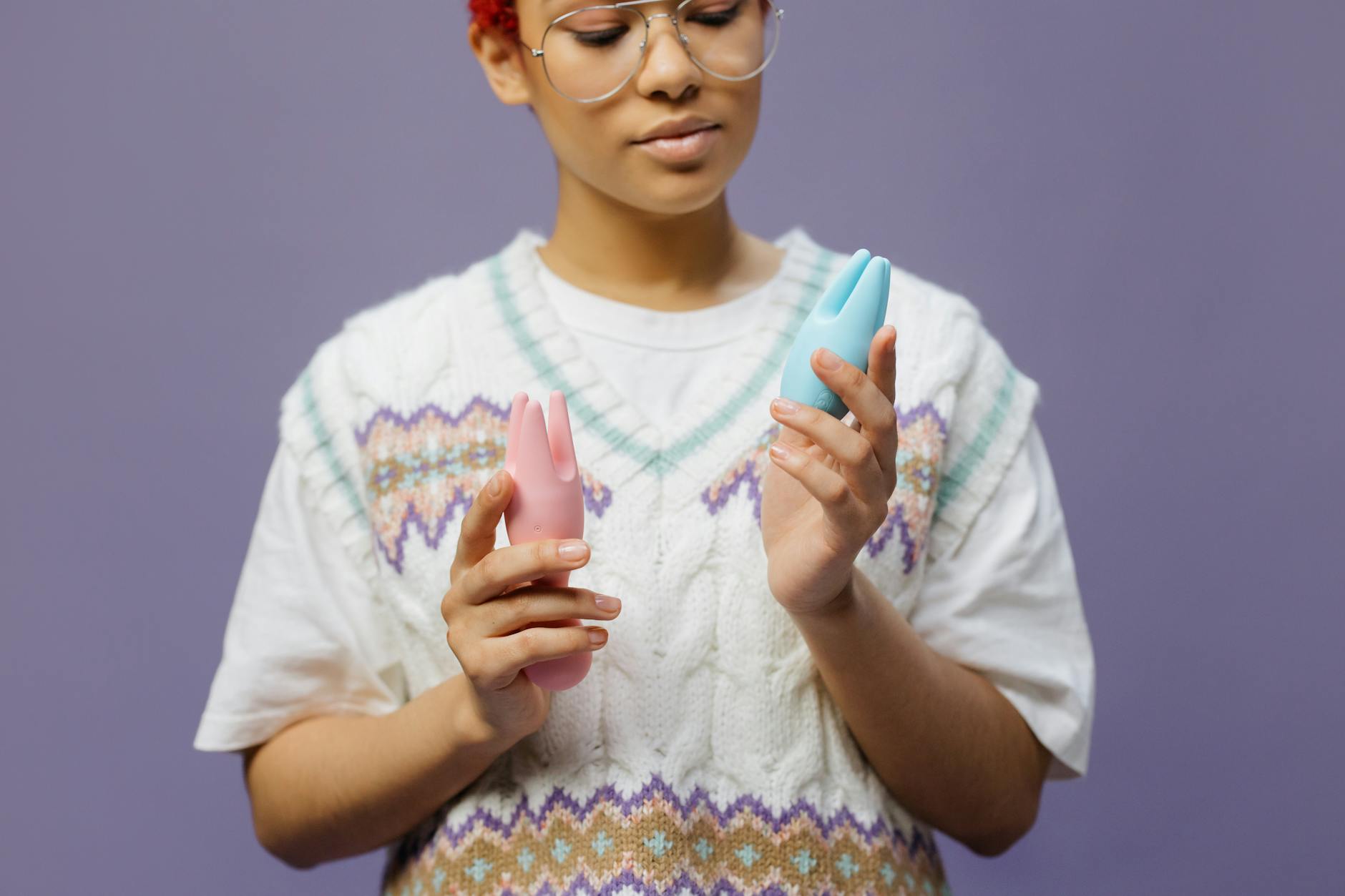
Photo by cottonbro studio on Pexels
Managing the emotional landscape
ED carries a lot of weight for men. It hits identity, masculinity, desirability. A vibrator can feel like "I'm not enough." That's not rational, but shame rarely is.
Here's what helps: frame the vibrator as something you want for you, not something he needs. Because that's true. Your pleasure and his pleasure are separate things now. You get to chase orgasm. He gets to experience sex without a scorecard.
Speak to that difference explicitly. "I love what you do. I also want more intense clitoral stimulation sometimes, and this lets me have that." Not "you can't get me there." Just "this is what my body responds to."
If he's resistant, give space. This is new. Shame is loud. Reassurance helps more than pushing. "I'm not going anywhere. I want us both to feel good. Let's just try."
Physical adjustments that smooth the transition
Lube matters more when you're learning new rhythms together. Water-based works with any vibrator. Have it nearby, not scrambling for it mid-sex. That breaks mood and reintroduces performance pressure.
Start with lower intensity patterns. A lemon clitoral vibrator has multiple settings. Begin at pattern 1 or 2, especially if he's using it on you. Let sensation build. Orgasm isn't the goal. Pleasure is.
Comfort positioning helps too. If he's feeling anxious, being on top can amplify pressure. Side-by-side, or you on top with the vibrator in your hand, removes some of that weight.
Timing: Give yourselves time. Arousal takes longer when anxiety is present. Budget 20-30 minutes of touch and connection before any vibrator enters the scene. Let his nervous system actually settle.
When to see someone professional
Not all ED is anxiety. If he's interested in exploring medical options, that's separate from what you're doing here. Low testosterone, diabetes, cardiovascular issues, medication side effects. All treatable. A good doctor and a therapist who specializes in sexual health can help untangle which part is physical and which is psychological.
A lemon vibrator doesn't replace medical care. It complements it. Both can be true.
The longer view
What often happens over time is that pressure dissolves. Sex becomes about sensation again, not performance. His anxiety quiets. His body responds. And the vibrator stays because it feels good, not because he can't function.
Some couples find that once they've rebuilt pleasure without the pressure, they don't need the vibrator every time. Some find they do. Both are fine. The goal isn't to return to how things were. It's to build something that works now.
ED is common. Shame about it is even more common. A lemon clitoral vibrator doesn't fix physiology. It fixes the story you're both telling yourselves about what sex has to be.
People also ask
Will using a vibrator make my partner feel less needed?
Not if you frame it right. A vibrator isn't a replacement. It's a tool that removes the burden of performing. Most partners actually feel relief. The pressure to be everything vanishes. He gets to be present instead of proving something. That's more intimate, not less.
Can we use a lemon vibrator if he can't get or stay erect at all?
Completely. Vibrators work with or without penetration. You can have full, satisfying sex using a clitoral vibrator plus manual stimulation, oral sex, or even non-penetrative intimacy. Erection is one component of sex, not the entire definition.
How do I bring this up without making him feel worse about ED?
Timing and framing. Don't mention it after a sexual disappointment. Bring it up outside the bedroom, when you're both relaxed. Lead with your interest, not his failure. "I've been curious about exploring this" works better than "we need to fix this problem."
What if he's interested in sex but can't maintain arousal long enough?
Start with the vibrator from the beginning of intimacy, not as a backup. It removes the "prove yourself" dynamic. Plus, clitoral stimulation often brings you to orgasm faster, which takes pressure off him to last longer.
Can we use a lemon clitoral vibrator during penetration?
Yes. Many couples use it externally while he's inside. Some use it before penetration to get you close to orgasm, then transition. Experiment with what feels good. There's no right way.
Will ED improve if we use a vibrator regularly?
Maybe. For many men, anxiety-driven ED improves significantly once the performance pressure lifts. For others, the underlying cause is physical and needs medical attention. Both can be true. A vibrator addresses the psychological piece. A doctor addresses the medical piece.