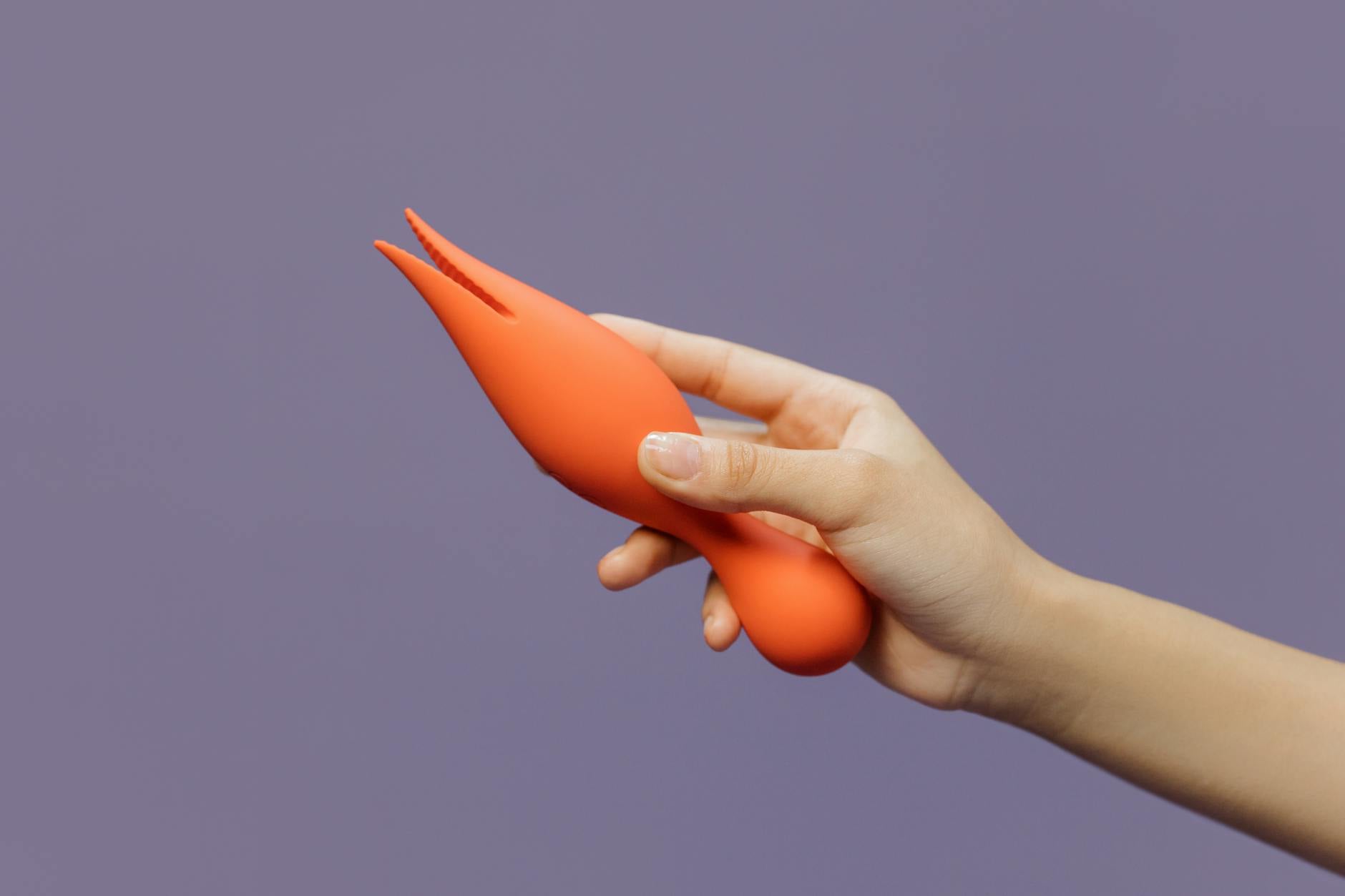
How to Use a Lemon Vibrator When Stress and Anxiety Kill Your Libido
When work, worry, and overwhelm shut down desire, a reset button for pleasure matters. Here's exactly how clitoral vibrators work when your nervous system is stuck in high alert.
Here's the thing nobody says out loud: stress doesn't kill orgasms first. It kills desire. You can still have an orgasm when you're anxious, but the wanting part? That gets switched off long before arousal gets hard. Your nervous system prioritizes survival over pleasure, and when work deadlines, financial worry, or family tension are cycling through your head, pleasure literally stops signaling to your brain as important.
This is not a relationship problem. It's not a toy problem. It's a nervous system problem. And that matters because most people blame themselves, or their partner, or assume they've "lost it" somehow. You haven't. Your body is doing exactly what it's supposed to do under chronic stress: it's rationing resources for what feels like emergency mode.
The good news is that clitoral vibrators like the Lemon Vibrator can actually help restart that signaling. But not the way you probably think.
You know that advice about "setting the mood"? Candles, music, partner focus. It completely collapses under stress because it assumes your nervous system has bandwidth for subtle cues. When you're running on cortisol and adrenaline, soft lighting feels pointless. Your brain is too loud.
This is where a lemon clitoral vibrator works differently. The suction-based stimulation of devices like the Lemon bypasses the cognitive layer entirely. You don't need to build arousal through thought or imagination. The vibrator creates a direct physical signal that your nervous system registers as pleasure, independent of what's happening in your prefrontal cortex.
I've worked with clients who describe it as "giving permission to a different part of my brain to take over for 15 minutes." That's exactly what's happening physiologically. The clitoral stimulation activates a circuit that's somewhat separate from the anxious, planning part of your mind.
When stress has your body locked in fight-or-flight mode, one of two things happens sexually: either desire vanishes (most common), or you feel guilty for wanting pleasure when you "should" be managing the crisis. Both are dead ends.
A lemon sexual toy offers something different. It's a contained, time-limited activity that tells your nervous system: "This 10 or 15 minutes, we are safe. This is allowed." Solo use matters here especially. With a partner, there's often an emotional negotiation happening. Alone, you're just retraining your body to remember what pleasure feels like.
Start small. Not because you need to build up to pleasure, but because your nervous system is defensive right now. Set a timer for 10 minutes. Lower intensity than you'd normally use. The goal isn't orgasm (though it might happen). The goal is proving to your body that pleasure is still available, and that having it doesn't mean you're neglecting anything else.
Many people find that the first few sessions feel mechanical or strange. That's normal. You're rewiring a circuit that's been dormant. After three or four sessions over a week, something shifts. The anticipation returns first. Then the orgasm becomes easier.
You can't force relaxation, but you can create conditions where it's more likely. Before you use your lemon vibrator, spend five minutes doing something that's physically calming but not mentally demanding. A shower. A walk outside. Stretching. Not meditation (that requires focus you might not have). Something that lets your body downshift without requiring your anxious brain to "do it right."
Turn off work notifications. This is non-negotiable. Your nervous system is already half-listening for the next emergency. You need a clean hour where nothing can interrupt.
If you're using a lemon clitoral vibrator with a partner during this time, the setup matters. Explain what you're doing: "My stress has killed my desire, and I'm going to restart it solo first. I'm not avoiding you. I'm fixing a system issue." Partners often feel blamed or excluded when sex dries up under stress. Being specific about your plan prevents that.
When you sit down with your lemon adult toy, expect the first 5 minutes to feel like you're going through the motions. That's not a failure. Your body is slowly waking up after being in lockdown. Here's the sequence that usually works:
Start at intensity level 1 or 2. This is lower than feels immediately pleasurable, which is exactly the point. You're not chasing a sensation. You're creating a conversation between your body and the vibrator.
After 2-3 minutes, notice what you notice. Not what you think you should feel. What's actually present. Is there tension? Numbness? A faint tingling? Name it internally. This observation alone starts shifting your nervous system toward curiosity instead of performance.
Move to level 3 or 4 around the 5-minute mark. By now your body usually has some baseline response. This is where pleasure often clicks in.
If an orgasm builds, let it. If it doesn't, that's fine too. The repetition of "I have time to explore pleasure" is the actual reset, not the orgasm itself.
Stop after 10-15 minutes, even if you could keep going. This teaches your body that pleasure is sustainable, not something you have to wring out of yourself in one session.
Stress-killed libido often looks like rejection in a relationship. Your partner wants you, you feel nothing, resentment builds. You want to want them but can't access it. Then you start having sex out of guilt, which makes everything worse.
Using your lemon vibrator solo during stressful periods isn't about excluding your partner. It's about resourcing your own nervous system first. Once pleasure comes back online solo, partnered sex often follows more naturally. You're not forced. You're choosing from a place where desire is actually possible.
Talk about this explicitly. "When we're both stressed, my body shuts down. I'm going to spend some time reconnecting to pleasure on my own, and I'll let you know when I'm ready to explore that with you again." That's honest. That's partnership. That's not the withholding narrative that anxiety tells you.
The suction-based stimulation creates a different neural pathway than vibration alone. For people whose stress has created deep numbness, that stronger, more targeted sensation often cuts through better. It's not subtle. It doesn't require arousal to activate. It creates arousal.
Compare this to a partner's touch, which requires a certain amount of physical openness you might not have when cortisol is high. The lemon clitoral vibrator is constant, unambiguous, and doesn't require you to reciprocate or manage anyone else's experience.
First session: weird, maybe mechanical, probably not intense pleasure. Normal.
Sessions 2-4: arousal begins returning. Anticipation kicks in before you even start. This is the biggest sign that your nervous system is retraining.
Weeks 2-3: pleasure feels more integrated. You can access it more quickly. Intensity starts to matter again (you'll want higher levels).
Week 4 and beyond: desire has usually started returning in other contexts too. Not back to baseline yet, but no longer absent.
This timeline only works if the underlying stress is actually being managed. If you're still in crisis mode, solo pleasure sessions are still useful, but they're holding a space, not solving the root problem. Talk to someone about the stress itself. That's the actual fix.
Don't push yourself into partnered sex too early. Forcing it teaches your body that pleasure is an obligation, which makes stress-related shutdown worse.
Don't expect one session to reset everything. Stress-related numbness took weeks or months to develop. It takes time to reverse.
Don't use your vibrator as a replacement for managing actual stressors. A lemon sexual toy can help your nervous system recover. It can't fix a genuinely unsustainable life. If you're in permanent crisis, pleasure sessions are part of healing, but not the whole answer.
Don't shame yourself for needing this reset. Stress killing desire is biology, not a personality flaw or a relationship problem.
If this pattern has been going on for three months or longer, and stress management isn't improving things, talk to a therapist. Sometimes numbing is depression. Sometimes it's anxiety. Sometimes it's a legit stress response that just needs more support than solo pleasure practices can provide.
If your partner is interpreting your lack of desire as rejection of them (rather than a stress response), relationship counseling is useful. The story you're both telling about what's happening matters as much as the actual physiology.
Your pleasure matters, even during stressful seasons. Not because it fixes the stress, but because maintaining a connection to your own body and desire is part of how you survive overwhelming periods without completely disappearing into crisis mode.
Desire (the wanting part) lives in the limbic system and prefrontal cortex. Stress floods those systems with cortisol and adrenaline, telling your brain that survival matters more than pleasure. Arousal (the physical response) can happen reflexively even under stress, which is why you might be able to come but can't access wanting it. Your nervous system is literally rationing bandwidth. Solo pleasure practices with a lemon vibrator help retrain those systems to recognize pleasure as part of survival, not a luxury to defer.
Three to four times per week is enough to see the nervous system reset start happening. Daily use isn't necessary and can sometimes feel like another obligation (which defeats the purpose). Think of it as consistent but not rigid. If you miss a few days, that's fine. You're building a habit of pleasure, not creating a new source of stress.
Yes, but separately from partnered sex at first. Use your lemon toy solo to restart your own pleasure signaling, then gradually incorporate partnered touch as desire returns. If your partner wants to use it on you, that's a conversation to have once solo use has rebuilt some baseline arousal. Stress-killed desire often needs solo reconnection first.
Nope. Stress-related numbness isn't about your partner. It's about your nervous system being in lockdown. Solo pleasure with a vibrator is a form of self-care and nervous system regulation. Many people find that reconnecting to solo pleasure actually rebuilds desire for partnered sex, because you're no longer forcing yourself through guilt.
Suction-based stimulation creates a stronger, more localized sensation that often cuts through numbness better than vibration alone. For people whose stress has created deep physical disconnection, that more intense signal sometimes activates pleasure circuits that subtle vibration doesn't reach. It's not that it's objectively better, it's that the neural pathway it creates is sometimes what a stressed, numb nervous system needs.
That's a sign that the numbness is deeper than acute stress response. It might be depression, a medication side effect, or trauma. Talk to a therapist or doctor. Pleasure practices are part of healing, but they're not a substitute for professional support when something bigger is happening.
Stress doesn't mean you've lost your capacity for pleasure. It means your nervous system has temporarily deprioritized it. A lemon vibrator, used consistently and without pressure, gives your body permission to remember that pleasure is possible even during hard seasons. That's not indulgence. That's survival.
Start small. Be consistent. Don't rush back into partnered sex before you're ready. And recognize that what you're doing is real work: you're retraining your nervous system to recognize safety and pleasure as connected again.
Your desire will come back. But it comes back faster when you're actively listening to your body instead of pushing through numbness. That's what lemon clitoral vibrators are for: giving you a tool to have that conversation with yourself when stress has made it hard to hear.