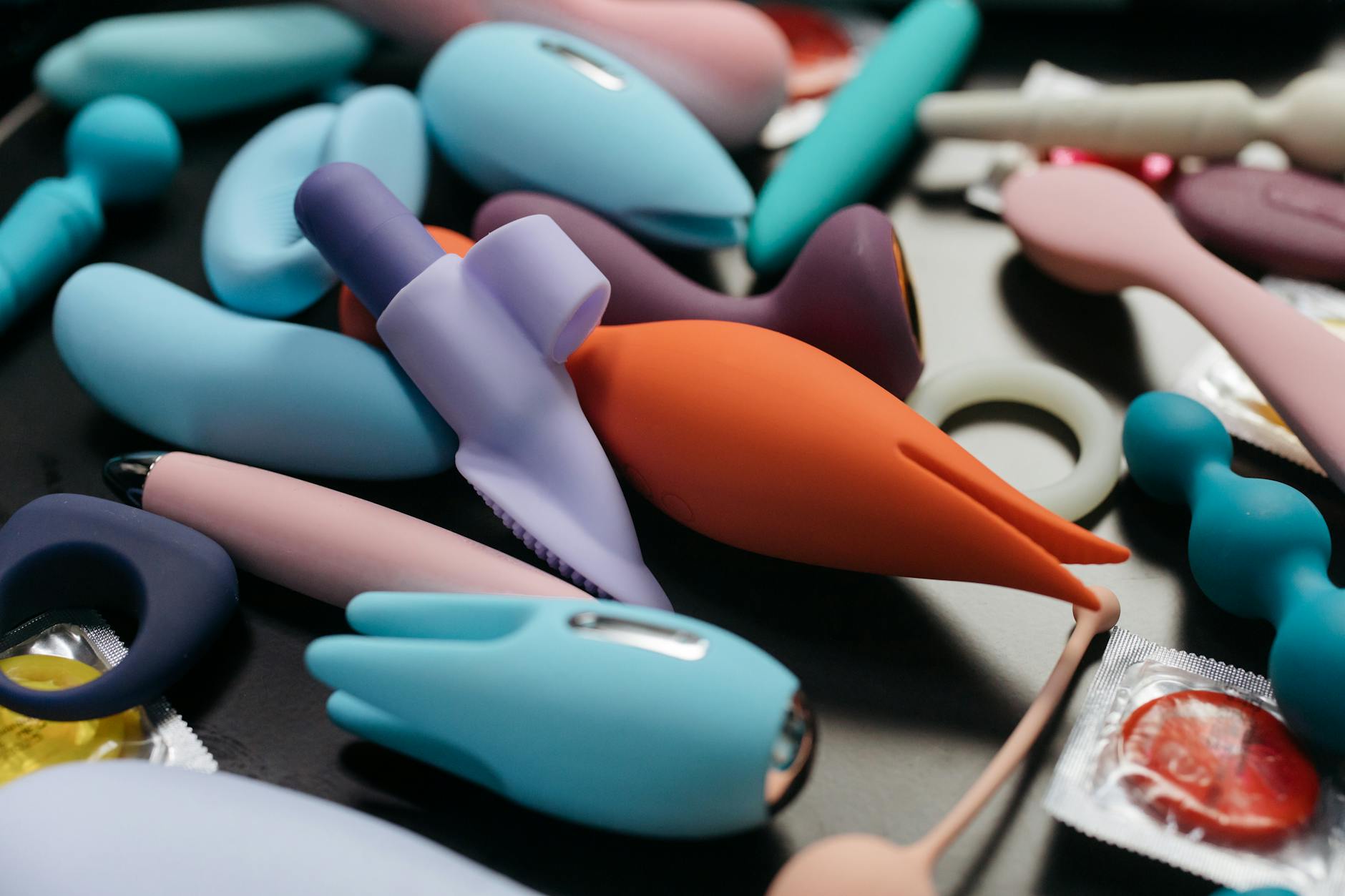
Let's be direct about what SSRIs do
Antidepressants work by raising serotonin. That's great for mood. It's also why roughly 40 percent of people on SSRIs report sexual side effects: delayed orgasm, reduced sensation, lower desire, difficulty getting aroused. Your brain chemistry shifts, and your body notices.
The frustrating part? Your doctor might not bring it up. You might not realize the change is medication-related until weeks in. And by then, pleasure already feels harder than it should.
Here's what actually happens physiologically, and what a lemon vibrator can and cannot do about it.
Why SSRIs dull sensation
SSRIs don't directly numb your genitals. Instead, they raise the threshold for arousal. Your brain needs more stimulation to register pleasure. The nerve endings are still there. The clitoris hasn't changed. But the signal between sensation and pleasure gets quieter.
This is especially brutal if you had reliable orgasms before. You know exactly what's missing. The touch that used to work barely registers now.
Some people also experience anorgasmia, which means orgasm is possible but takes so long (30 minutes plus) that it stops feeling worth the effort. Others find orgasm arrives but feels muted, like you're experiencing it through glass.
What a lemon vibrator changes
A lemon clitoral vibrator doesn't fight your medication. It works around it.
Here's the difference between a lemon vibrator and other toys when you're on SSRIs:
Most vibrators give you buzz. The Lemon gives you suction. Suction stimulates a wider nerve network across the clitoris, not just the surface. For someone whose sensation has been dampened by antidepressants, that broader stimulation often means the signal reaches your brain more reliably.
It's not magic. But it's often enough to close the gap between "I can feel this vaguely" and "I can actually experience pleasure again."
Many of my clients report that a lemon vibrator is the first toy that worked after they started SSRIs. That's not a coincidence.
Getting started: timing and expectations
Don't expect instant results. Your nervous system needs time to relearn what pleasure feels like on medication.
Start with realistic goals. You're not trying to feel exactly like you did before SSRIs. You're trying to feel something. Anything. A warm sensation, a flutter, enough stimulation to tip into orgasm, even if it's slow.
Set aside 20-30 minutes for your first session. No time pressure. No partner waiting. Just you, the lemon vibrator, and permission to explore without a deadline.
Pick a moment when you're already a bit warm. That might mean reading something you find hot, watching something arousing, or just giving yourself mental permission to want this. The lower threshold for arousal means you benefit even more from what used to be foreplay.
How to use it: the practical setup
Start on the lowest setting. If you're numb, you might want to jump straight to high intensity. Don't. Your nervous system will adjust faster if you build gradually.
Position the lemon vibrator so the suction cup is centered over your clitoris, not off to one side. The sensation is concentrated. You'll feel it.
Use it for 3-5 minutes at a time on the lowest setting. Then pause. Let your nervous system process what it just felt. This is not a race. Speed up later if you want. Right now, you're waking up sensation that's been asleep.
If nothing happens after 10 minutes, stop. You're not broken. Sometimes the medication just needs a different window. Try again tomorrow, or at a different time of day.
If you feel something, keep going. Slowly increase the intensity if you want, but only after your body has settled into the lower sensation first.
The medication conversation you need to have
Before you blame yourself or think you're broken, talk to your prescriber.
Some antidepressants are worse for sexual function than others. Sertraline (Zoloft) and paroxetine (Paxil) are notorious. Escitalopram (Lexapro) and bupropion (Wellbutrin) are gentler. If your particular SSRI is causing serious problems, switching to a different class might help without changing your mood stability.
Your doctor might suggest:
Timing your doses differently (taking them at night instead of morning, or vice versa). Waiting it out (sensation often returns after 3-6 months as your body adjusts). Taking a medication holiday before sex (risky, and requires medical supervision). Adding a second medication to counteract the sexual side effect. Switching to a different antidepressant altogether.
None of these are guaranteed. But they're worth asking about. You're not complaining about a minor inconvenience. Sexual numbness is a legitimate medical side effect, and you deserve to address it.
Why patience matters more than intensity
When sensation has been dampened, there's a temptation to use the strongest toy at the highest setting immediately. That usually backfires.
Higher intensity can actually desensitize you further, the same way yelling doesn't help someone hear better if they're not listening yet. You need the signal to come back first.
Using a lemon vibrator at moderate settings, consistently, over weeks, is what usually works. Your nervous system slowly relearns that this sensation means pleasure. The threshold lowers. Orgasm becomes possible again.
It's frustratingly slow compared to before. But it works.
Combining the vibrator with other tools
If the lemon vibrator alone isn't opening the door, try pairing it with other things.
Lubricant helps, even though you might not feel like you need it. Extra slickness means less friction, which sometimes makes the sensation feel cleaner and easier to register.
Fantasy or erotica matters more than ever. Your brain needs permission to feel pleasure, and sometimes imagination is the permission slip. Spend time with whatever turns you on, whether that's reading, video, audio, or just thought.
Time of day shifts sensation. Some people find morning is better. Others notice evening works after their body has warmed up a bit. Experiment.
Partner involvement changes the equation. If you have a partner, letting them know what's happening ("My medication is making sensation harder, and I'm working on rebuilding it") can open a conversation about how they can help. That might mean longer foreplay, manual stimulation while you use the vibrator, or just emotional support while you relearn your body.
When to reach out to a professional
If a lemon vibrator and time aren't moving the needle after 4-6 weeks, talk to your therapist or a sex therapist.
Sexual side effects from SSRIs are extremely common, and a professional trained in medication-related pleasure issues can help. They might suggest strategies you haven't tried, or help you navigate the conversation with your prescriber.
If the numbness is paired with other issues (relationship strain, grief over the change, loss of interest in sex entirely), therapy helps with that too.
You're not being impatient or oversexualized for wanting this fixed. Sexual pleasure is part of your health. It matters.
FAQs
How long does it take to regain sensation after starting a lemon vibrator with SSRI numbness?
Most people notice some return of sensation within 2-4 weeks of consistent use, a few times per week. Full sensation recovery can take 6-12 weeks, depending on which SSRI you're on and how severe the numbness is. Some people regain sensation slowly over months. The key is consistency without pressure. Using the lemon vibrator sporadically won't rebuild your nervous system's response.
Can I use a lemon vibrator if I'm on multiple medications that affect sensation?
Yes, but the timeline might be longer. If you're on an SSRI plus another medication that also affects sexual response (like certain blood pressure meds), talk to your doctor about the combined effect. A lemon vibrator is still a useful tool. You might just need more patience and possibly a higher intensity setting than someone on SSRIs alone.
Will a lemon vibrator help if I have anorgasmia from antidepressants?
Often, yes. Anorgasmia means the sensation and arousal are there, but orgasm takes impossibly long or doesn't arrive at all. A lemon clitoral vibrator's suction mechanism sometimes makes orgasm more accessible because it stimulates more nerve endings at once. Many people find they can reach orgasm with a lemon vibrator when other methods have stopped working.
Should I tell my doctor I'm using a vibrator?
There's no medical reason to hide it, and there are good reasons to mention it. If your doctor asks what strategies you're using to rebuild sensation, "I'm using a clitoral vibrator" is honest and useful information. It helps them understand what's working for you. That said, you don't owe anyone disclosure. If you're uncomfortable, you can keep it private.
What if the lemon vibrator feels too intense even on the lowest setting?
Start without turning it on. Just the contact, the shape, the suction cup sensation without the vibration can help you relearn pleasure. Some people benefit from 5-10 minutes of just that before adding any vibration. You're not being too sensitive. You're just recalibrating.
Can I switch antidepressants to avoid sexual side effects without losing mood stability?
Sometimes, yes. But this is a conversation with your prescriber, not a DIY change. Some SSRIs are genuinely less harsh on sexual function. Bupropion in particular often improves mood without the numbness. Your doctor can weigh the trade-offs for your specific brain chemistry. Don't stop or switch without guidance, but do ask the question.
The bottom line
Antidepressants save lives. They also, sometimes, make pleasure harder. That's a real trade-off, and it deserves real solutions. A lemon vibrator doesn't override your medication. But it does often create a path back to sensation when sensation has gone quiet. Pair it with patience, the right conversation with your doctor, and permission to rebuild pleasure slowly. You're not broken. You're just working with different chemistry than you were before.