Here's what you're actually wondering
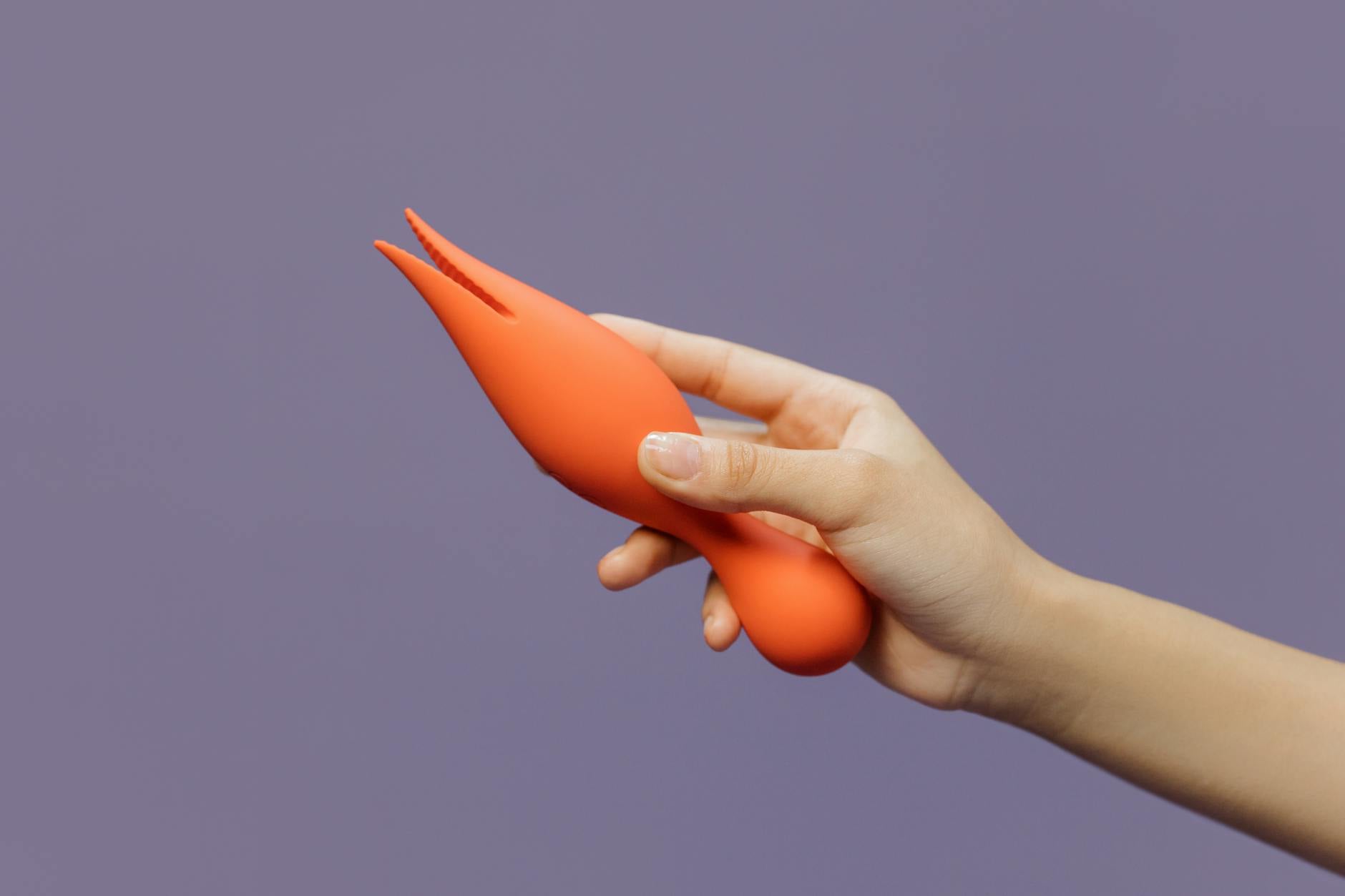
You're pregnant. Your body feels weird. Sex might feel different, better, stranger, or completely off the table depending on the day. And somewhere between the prenatal vitamins and the third ultrasound, you wondered: is it safe to use a lemon vibrator right now? The answer is yes. But there's context, nuance, and a few things worth knowing first.
Most OBs don't bring this up unprompted because they're not trained to talk about sexual wellness during pregnancy. That leaves you Googling at midnight with half-formed questions. I'm here to give you the actual clinical answer.
What the research says about vibrators and pregnancy
First, the reassuring part: there is no evidence that using a lemon clitoral vibrator or any sexual toy during pregnancy increases miscarriage risk, causes infection, or harms the developing baby. Zero. The baby is protected by the amniotic sac, cervical plug, and the uterine wall. A vibrator doesn't reach any of that.
Orgasms during pregnancy are also safe. Contractions from orgasm are different from labor contractions. They're localized to the pelvic floor and don't trigger premature labor in low-risk pregnancies. Studies on this go back decades, and the consensus is consistent.
That said, pregnancy changes everything about how your body responds to stimulation. Hormones surge. Blood flow increases to the pelvic region. Some women report more intense orgasms during pregnancy. Others find they've lost interest entirely. Both are completely normal.
Why a lemon sucker design works well in pregnancy
If you're considering a lemon vibrator or similar clitoral toy during pregnancy, the suction design is actually one of the gentler options. Here's why that matters.
During pregnancy, the vulva swells. Tissue becomes more sensitive and more fragile. Direct vibration that felt perfect six months ago might feel too intense now. The graduated suction pattern on a lemon clitoral vibrator allows you to control intensity without direct mechanical pressure. You can start at a lower setting and build up only as much as feels right.
This is why some of my clients find that switching to a lemon vibrator during pregnancy, even if they've used other toys before, makes the experience more comfortable. The design gives you precision without aggression.
The situations where you should pause
There are a few clinical contexts where doctors recommend skipping sexual activity altogether during pregnancy. If that applies to you, vibrators are off the table too.
Placenta previa. If your placenta is covering the cervix, penetration and sometimes external stimulation can cause bleeding. Your OB will tell you clearly if this is your situation.
History of preterm labor. If you've had early labor before, stimulation that triggers orgasm might not be worth the risk in early pregnancy. Talk to your doctor about what's safe.
Unexplained bleeding or cramping. Any time you're having symptoms you don't understand, hold off on sexual activity until you've checked in with your care provider.
Cervical insufficiency. If your cervix is weak or short, orgasms could theoretically increase pressure. Your OB will know if this applies to you.
If none of these apply, you're almost certainly fine. But always run your specific situation past your doctor if you're uncertain.
The comfort and hygiene reality
Physically using a lemon vibrator during pregnancy is straightforward, but a few practical things make it easier.
Your vulva is more sensitive. Introduce the toy slowly. Warm-up time matters more than before. You might need more lubrication even though blood flow is higher. This isn't a sign something's wrong. It's just how pregnancy shifts things around.
Clean your toy before and after, as always. Pregnancy doesn't change the hygiene rules, though your immune system is naturally more suppressed, so infection prevention matters a bit more.
Positioning might feel different. Lying on your back for extended periods becomes uncomfortable around six months. You might prefer side-lying or sitting positions. Your body will tell you what works.
What changes about desire and sensation
Something worth knowing: pregnancy libido is wildly variable. Some women experience a dramatic increase in desire. Others find sex sounds terrible for nine months. Both patterns are hormonal and completely healthy.
If you're in the high-desire camp, a lemon clitoral vibrator can be a useful tool for exploring pleasure without the logistics of partnered sex. If penetration feels uncomfortable or off-limits due to soreness, a clitoral toy gives you another avenue for satisfaction.
If you're in the no-desire camp, don't force it. Orgasms during pregnancy are safe, but they're not mandatory. Your body knows what it needs.
One thing I've observed clinically: some women use pregnancy as the moment to actually explore toys they've been curious about. The reduced judgment, the validation that sexual wellness matters, the lower performance pressure. If that's you, pregnancy can actually be liberating. A lemon vibrator or similar toy becomes part of taking care of yourself during a major body transition.
After birth, reset your expectations
Something that catches people off guard: you don't resume vibrator use the same way you left off. Postpartum bodies are different. If you had vaginal tearing or a c-section incision, tissue is healing. Even if delivery was straightforward, hormones are chaotic, pelvic floor muscles are tired, and you're probably sleep-deprived.
Most doctors recommend waiting six weeks before resuming penetrative sex. Vibrators are less clear cut. If you're just using clitoral stimulation and you feel ready, the risk is very low. But many women find that waiting eight to twelve weeks before introducing toys feels better physically and emotionally.
When you do return to a lemon vibrator or clitoral toy, start at the lowest setting. Your sensitivity is reset. What you tolerated during pregnancy might be too intense now. Gradually work back up to what felt right before.
The emotional side nobody talks about
Here's the thing about pregnancy and sexuality that goes beyond the clinical. Your body is doing something extraordinary. It can also feel like it's not yours. Sex and self-pleasure are ways of reclaiming embodiment. They're a form of intimacy with yourself when your body feels borrowed.
Using a lemon vibrator during pregnancy isn't frivolous. It's a concrete way of saying, "I still live in this body. My pleasure still matters." That's valuable.
If you have a partner, the conversation about vibrators during pregnancy is worth having. Some partners worry that toys mean they're not enough. Frame it differently: a vibrator is self-care. It's about maintaining your own relationship with pleasure during a season when everything is shifting. That's actually a form of intimacy, not a substitute for it.
Photo by IFONNX Toys on Pexels
FAQ: Pregnancy and lemon clitoral vibrators
Can vibrators cause miscarriage?
No. There is no clinical evidence linking vibrator use to miscarriage in low-risk pregnancies. The baby is fully protected inside the uterus. A vibrator can't reach the fetus or the amniotic sac. If you're in a high-risk category (placenta previa, history of preterm labor, unexplained bleeding), talk to your OB first. Otherwise, you're safe.
Will orgasms during pregnancy trigger labor?
No. Orgasms create contractions in the pelvic floor muscles, not the uterus. These feel localized and don't match the pattern of labor contractions. The research is very clear on this. The only caveat: if you have a history of preterm labor, check with your doctor before resuming sexual activity, including vibrator use.
Is it safe to use a lemon vibrator if I have a sensitive cervix?
If your doctor has mentioned cervical sensitivity or insufficiency, skip penetrative toys and stick to external clitoral stimulation only. A lemon vibrator designed for clitoral suction is ideal because it doesn't require internal contact. Just avoid any toys that press into the vagina or cervix. Always confirm your specific situation with your care provider.
Can I use a lemon vibrator during the first trimester?
Yes, in most cases. The first trimester is when miscarriage risk is highest naturally, which makes people nervous. But vibrator use doesn't increase that risk. The baby is still tiny and fully protected. If you're having any spotting or unusual cramping, pause and check in with your doctor. Otherwise, first-trimester vibrator use is safe.
What if I'm uncomfortable but still want pleasure during pregnancy?
This is where tools matter. If penetration feels sore or off-limits, a lemon clitoral vibrator gives you another path to satisfaction without internal contact. External stimulation is simpler, often more comfortable, and sometimes more intense. You might also explore lower-intensity settings or longer warm-up time. Your body isn't broken. It's just different right now.
Should I tell my OB I'm using a vibrator during pregnancy?
If you have a straightforward pregnancy and no risk factors, it's not medically necessary. But if you have any complications or risk factors, mentioning toy use during your risk discussion is worth it. Most modern OBs won't judge. If they do, they're behind on the evidence. You deserve a care provider who treats sexual wellness as part of health, not a taboo topic.
The bottom line
A lemon vibrator is safe during pregnancy in most cases. Your body is going through one of the most intense transformations it will ever experience. Maintaining a relationship with your own pleasure is not indulgent. It's part of staying embodied, staying connected to yourself, and honoring that your sexuality doesn't pause just because you're pregnant.
Use the tools that feel good. Start with lower intensity. Check in with your body. And if anything feels off, ask your doctor. That's what they're there for.
Your pleasure matters. At every stage of life, including this one.
References & sources
Bartellas, E., Crane, J. M., Daley, M., Bennett, K. A., & Hutchens, D. (2000). Sexuality and sexual activity in pregnancy. BJOG: An International Journal of Obstetrics & Gynaecology, 107(8), 964-968.
Gazaigne, L., Tourneux, P., Senat, M. V., & Besson, R. (2015). Maternal orgasm during pregnancy and adverse fetal outcome. Journal of Maternal-Fetal & Neonatal Medicine, 28(4), 482-486.
American College of Obstetricians and Gynecologists. (2021). Sexual activity during pregnancy and the postpartum period. ACOG Committee Opinion No. 882.
Nicolas, S. M., Renouvel, F., & Bonnet, G. (2013). Sex during pregnancy: A prospective study of attitudes and practices. Archives of Sexual Behavior, 42(8), 1417-1425.
Lee, J. K., Parisi, S. M., Giudice, L. C., & Odem-Davis, K. (2018). Pregnancy and sexual desire: A review of literature. Reproductive Sciences, 25(11), 1466-1481.