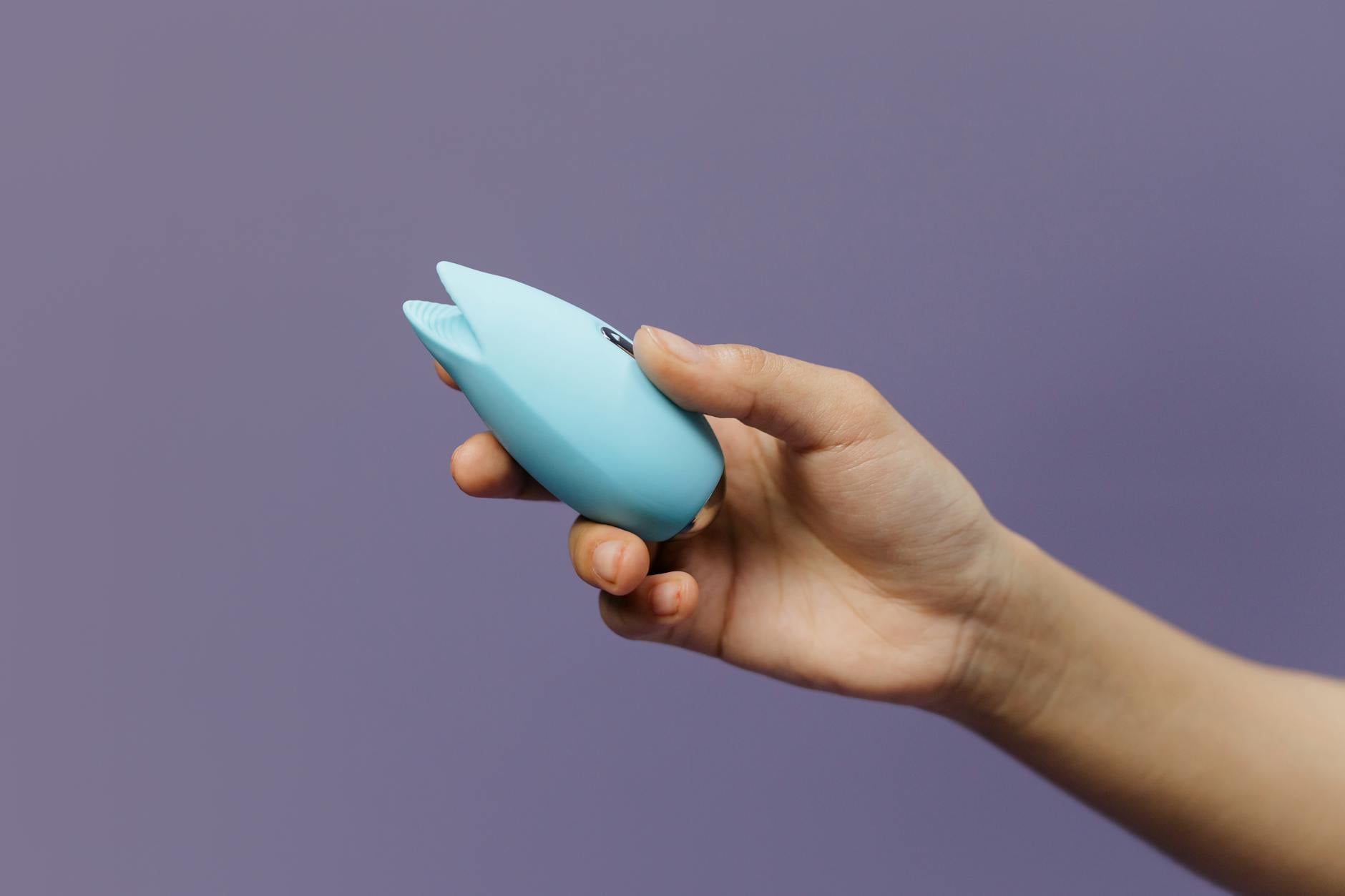
Best Lemon Vibrator for Couples: Shared Pleasure Without the Learning Curve
Let's be real: introducing a lemon vibrator into partnered sex can feel like navigating a minefield of unspoken assumptions. What if your partner feels threatened? What if the device is too complicated to use during sex? What if it's loud, slow, or just kills the mood entirely?
Honestly, most of these fears dissolve once you understand what actually matters in a couple's vibrator. Spoiler: it's not the fanciest settings or the prettiest design. It's rhythm, access, and communication.
I've worked with hundreds of couples integrating clitoral vibrators into their intimate life, and the ones who succeed aren't the ones with the "best" toys. They're the ones who picked devices that matched their actual bodies, their actual rhythm together, and their actual comfort with technology during sex.
Here's what I've learned about choosing a lemon vibrator that works for partnered play.
Why couples actually need a different vibrator strategy
Solo play and partnered play are completely different engineering problems.
When you're alone, you control everything. You can hold your toy at any angle, adjust patterns mid-action, take breaks without awkwardness, and restart if the moment fades.
With a partner, none of that is true. You need a device that's accessible from angles that aren't natural for solo play. You need patterns that layer well with penetration or manual stimulation, not patterns that overshadow them. You need something that doesn't require constant fiddling mid-sex.
A lemon clitoral vibrator designed for couples play accounts for all three constraints. The best ones also have a form factor that lets your partner still feel the connection without the toy getting in the way.
The three non-negotiables for couple's vibrators
1. Easy access during penetration (or whatever your rhythm is).
If your vibrator requires you to hold it at a weird angle or takes both your hands to operate, it kills the flow. The best lemon vibrators sit where you can reach them with one hand while your partner is actively involved.
This is why many couples default to external clitoral vibrators over internal toys. You're not competing for space inside the body. The vibrator enhances the sensation from penetration rather than replacing the sensation of your partner.
2. Patterns that don't dominate the sensation landscape.
Here's what I see go wrong: couples buy a vibrator with 10 settings, then spend 15 minutes trying different patterns mid-sex while the moment evaporates.
The best lemon vibrators for couples have 3-5 solid patterns that do one thing well. Usually, you want a consistent pulse (great for building arousal) and maybe one or two variable patterns. That's it. Your partner's rhythm is doing the real work. The vibrator is a supporting player, not the lead.
3. Noise and battery that work in real time.
If your vibrator is loud enough to kill the intimacy or dies halfway through, you've lost the psychological thread. Battery life should be measured in hours, not minutes. Noise should be low enough that you don't have to close the bedroom door like you're mining for gold.
Lemon vibrators tend to excel here because the suction-based pattern doesn't require the kind of aggressive motor noise that traditional vibrators do.
The communication piece (this matters more than you think)
Before you even buy a vibrator, have a conversation that separates two ideas: adding a tool versus changing the experience.
Many partners fear that bringing in a vibrator means the current experience isn't "enough." So they show up to the toy conversation already defensive.
Instead, frame it as expansion, not replacement. "I've been curious about how this might feel with you involved" is completely different energy than "I need this to actually enjoy sex with you."
Then get practical. Ask your partner:
Do you want to hold it, or do you want me to? Where would you feel comfortable with it in the picture? What patterns appeal to you when you think about sensation? Are there any hard boundaries around noise or material?
You're not asking permission. You're gathering data. And your partner is likely to feel more invested in the experience if they've helped shape how the toy enters the scene.
Rhythm matching: the secret ingredient
The couples I work with who love their vibrators tend to discover one specific pattern that locks into their body's natural response cycle.
Some people respond best to a steady pulse that mirrors their partner's motion. Others want a variable pattern that keeps the nervous system engaged without overwhelming it. A few want something very simple: just on and off.
The way you discover your rhythm isn't by reading product descriptions. It's by playing solo first, learning what your body actually responds to, then bringing that knowledge into the partnered space.
This is why getting a lemon clitoral vibrator that's intuitive to operate matters so much. You don't want to be problem-solving the device when you should be present with your partner.
Material and comfort considerations for couple's use
Most lemon vibrators are silicone-based, which is great for a few reasons: silicone is body-safe, it's easy to clean, and it doesn't absorb bacteria.
For couples specifically, silicone has another advantage. It's forgiving if your partner accidentally touches it during sex. It won't feel jarring or cold the way metal or hard plastic sometimes does.
Always check that the device is waterproof, especially if you're planning to use it during shower or bath sex, which many couples find lowers inhibition.
Size and hand control matter more than power
Here's a myth I need to bust: bigger motor equals better sensation.
It really doesn't. What matters is whether the vibration hits the nerve clusters that actually respond to stimulation. A well-designed lemon vibrator with a smaller motor often outperforms a bulky device that you can barely grip with one hand.
For couples, size directly affects whether the device stays accessible and discreet during sex. If your vibrator is large enough to require both hands or has an awkward form factor, it becomes a logistics problem rather than an enhancement.
Integration styles: three ways couples typically use vibrators
Scenario one: your partner holds it. This requires incredible trust and communication because your partner is literally controlling sensation. It works beautifully when you've explicitly talked about rhythm and pressure. Some partners love the control; others find it too much responsibility and would rather you guide your own pleasure.
Scenario two: you hold it while your partner focuses on other touch. Most common. You manage the vibrator, your partner focuses on penetration or manual stimulation elsewhere. This splits attention in a way that works for many people. Your partner isn't worried about the toy. You're not trying to coordinate. The sensations layer naturally.
Scenario three: the vibrator becomes a third party to the interaction. You both touch it, pass it back and forth, or use it in a more playful, exploratory way. This tends to work best once you're already comfortable with vibrators as a couple.
Noise, discretion, and life logistics
If you have thin walls, kids who occasionally wake up, or just live in a space where discretion matters, you need a quiet lemon vibrator.
Silence isn't luxury. It's essential to feeling safe and uninhibited. A loud vibrator means you're managing sound in your head while trying to experience pleasure. That's not actually relaxing.
The best lemon vibrators for couples run quiet enough that you can hold a conversation. If you need to actually talk during sex (which many couples do), audio clarity matters.
When to upgrade or add a second device
Once you've settled into using a vibrator as a couple, you might eventually want a second one.
Not because the first one failed, but because you've developed preferences that matter. Maybe you want a backup you keep charged and ready. Maybe you want to experiment with two vibrators at once. Maybe you've discovered you actually prefer a different style of clitoral vibrator for partnered play than you do for solo use.
Honestly, that's a sign the first choice was right. You learned what you wanted and now you're optimizing.
If you're still standing in the store paralyzed by choice, grab a lemon vibrator that feels intuitive in your hand and has 3-5 solid patterns. You can't make a wrong choice if you've had the communication conversation first.
Final clarity
The best vibrator for couples is the one that brings you both into the same rhythm without requiring an instruction manual mid-sex.
Take the time to have the conversation first. Let your partner weigh in. Then choose something simple, well-designed, and intuitive.
The rest unfolds naturally. Your pleasure matters. Their pleasure matters. The device just makes sure neither of you has to choose between them.
People also ask
How do I introduce a lemon vibrator to my partner without making them feel insecure?
Start by being specific about what you're curious about, not what's missing. "I've been thinking about how this might feel during sex with you" is not "I need this because what we have isn't working." The first conversation is about addition. The second is about criticism. Make sure you're having the first one. Then pick a moment outside the bedroom to talk about it. Pillow talk is too vulnerable for logistical planning.
Can we use a lemon clitoral vibrator during penetrative sex without it being weird?
Completely normal and incredibly common. Most couples find that external clitoral vibrators enhance penetration rather than distract from it. The vibrator stimulates the clitoris while your partner provides other sensations. You're not competing for the same real estate. This is one of the biggest reasons couples choose external vibrators over other options.
What if we're using the vibrator and my partner loses focus or feels left out?
Talk about it afterward, not during. During sex is not the moment to troubleshoot feelings. Once you're both settled, ask simple questions: Did that feel connected? Would you prefer to hold the vibrator? Would a different pattern help? The best couples integrate feedback over multiple encounters, not in real time.
Is a lemon sucker-style vibrator easier for partners to use than traditional vibrators?
Yes and no. Lemon vibrators use suction and pulsing rather than traditional vibration, which some people find gentler and more customizable. But "easier" depends on your body. Some people respond incredibly well to suction patterns. Others find them overwhelming. Solo testing before partnered play helps you know what you're bringing to the table.
How often should we use a vibrator during partnered sex?
There's no standard. Some couples use a vibrator every time and couldn't imagine sex without it. Others use it occasionally, as one option among many. The best rhythm is whatever keeps both of you engaged and present. If it becomes a crutch or a substitute for actual connection, that's a conversation. If it deepens intimacy, you've found your answer.
Should I buy the same lemon vibrator my partner loves, or do we need different devices?
You might find you prefer completely different settings for solo versus partnered play. Many couples end up with at least two vibrators, sometimes more. Start with one good device you both like, then add based on what you discover about yourself and your preferences over time. This isn't a one-purchase situation. It's an evolving toolkit.
The deeper angle
Choosing a lemon vibrator for couple's play is really about choosing to be honest with each other about pleasure. It's saying yes to knowing what your partner actually wants, not what you assume they want. It's a small device with surprisingly large emotional implications.
Take the conversation seriously. The vibrator will follow.
If you're still figuring out what might work for your dynamic, I'm here. Reach out to Hello Nancy and we can talk through your specific situation.